How to Build Muscle: The Evidence-Based Hypertrophy Guide

Building muscle is not about finding one perfect exercise, one magic rep range, or the most complicated training split.
To build muscle, you need progressive resistance training that provides enough weekly volume, brings working sets sufficiently close to muscular failure, uses exercises you can progressively overload, and gives your body enough nutrition and recovery to adapt.
That is the foundation of hypertrophy.
The 2026 American College of Sports Medicine position stand synthesized 137 systematic reviews covering more than 30,000 participants. Resistance training consistently increased muscle size, while higher weekly training volume was one of the variables most clearly associated with greater hypertrophy.
The goal is therefore not to make training more complicated.
The goal is to make it productive, measurable, recoverable, and repeatable.
Muscle Growth at a Glance
| Training Variable | Practical Starting Point |
|---|---|
| Weekly volume | Around 10 challenging sets per muscle per week, then adjust |
| Training frequency | Usually 2 exposures per muscle per week for practical volume distribution |
| Rep range | Mostly 6–15 reps, while broader ranges can also build muscle |
| Effort | Most hard sets performed within roughly 0–3 reps of failure |
| Rest periods | About 2–3+ minutes for demanding compounds; 1–2+ minutes for many isolation exercises |
| Range of motion | Use a large, controlled ROM and train muscles at long lengths where appropriate |
| Progressive overload | Add reps, load, productive volume, or improve execution over time |
| Protein | Around 1.6 g/kg/day is a strong evidence-based target for many lifters |
| Recovery | Enough rest to maintain or improve training performance |
These are starting points—not rigid laws.
Your program should adapt to your training experience, exercise selection, recovery capacity, schedule, and individual response.
1. What Actually Drives Muscle Growth?
Muscle hypertrophy is an adaptation to resistance training.
You expose muscle tissue to repeated mechanical demands, recover from those demands, and gradually increase what your body can handle.
That process can be summarized with the StrengthCode Hypertrophy Framework:
Stimulus → Effort → Volume → Progression → Recovery
Miss one consistently and progress eventually slows.
Progressive overload gives your body a reason to adapt
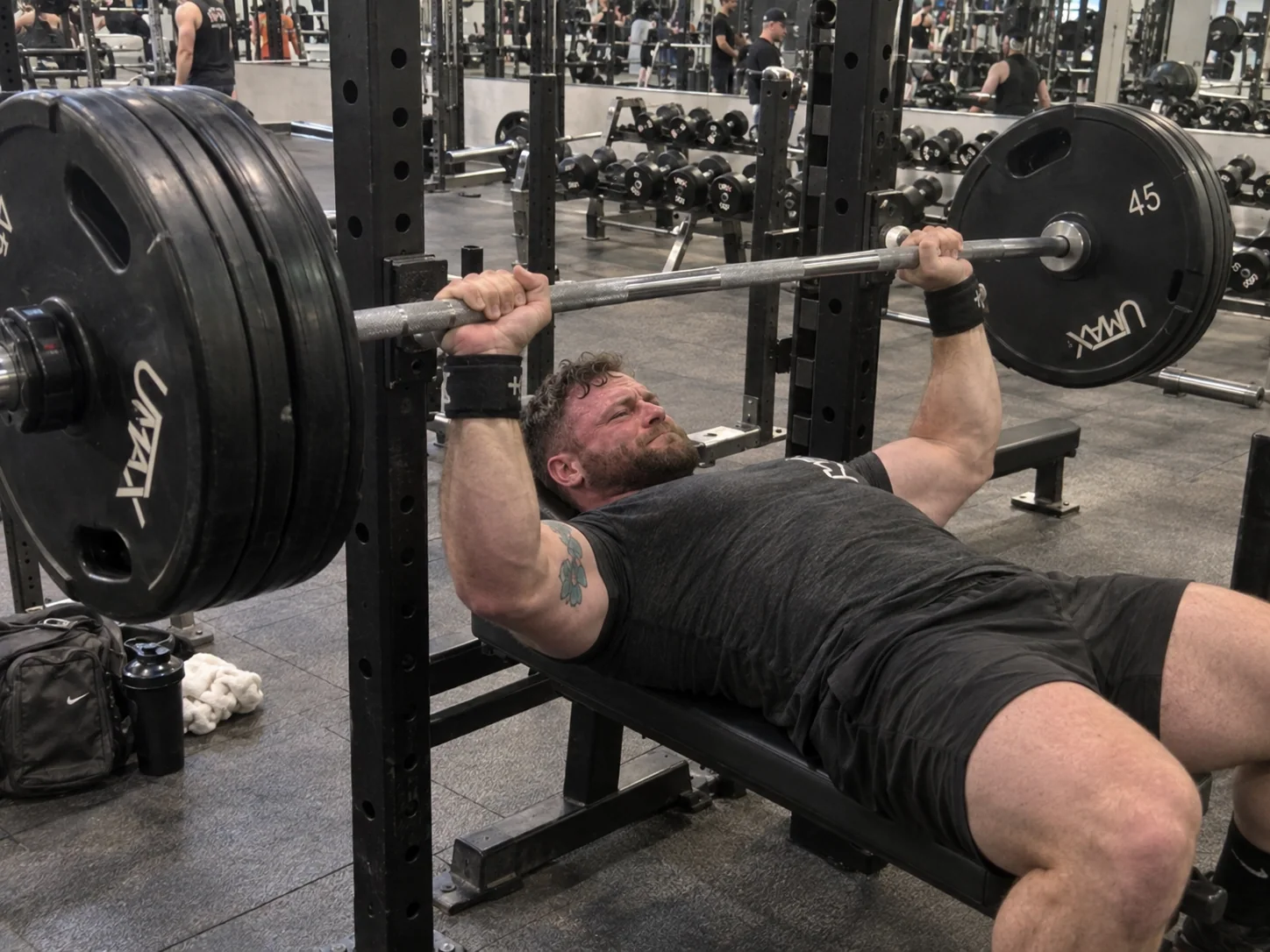
Progressive overload means increasing the training challenge over time.
That does not mean adding weight every workout.
Progress can come from:
- Performing more repetitions with the same load
- Increasing load while maintaining technique
- Increasing productive weekly volume
- Improving control and exercise execution
- Using a larger effective range of motion
- Performing the same workload with less effort
- Moving closer to failure when appropriate
Imagine you bench 80 kg for three sets:
Week 1: 8, 8, 7 reps
Week 2: 9, 8, 8 reps
Week 3: 10, 9, 8 reps
Week 4: 10, 10, 10 reps
You can now increase the load slightly and begin building upward again.
That is progressive overload without unnecessary complexity.
Read next: Progressive Overload: How to Build Muscle and Strength
There is no single magic hypertrophy rep range
The traditional 6–12 rep range works extremely well.
It is not the only range that builds muscle.
Research comparing lighter and heavier resistance training generally finds similar hypertrophy across a broad range of loads when the training is sufficiently demanding. Heavier loads retain an advantage for improving maximal strength.
For practical programming:
5–8 reps: useful for heavier compound exercises.
8–15 reps: excellent for most hypertrophy training.
15–30 reps: useful for many isolation exercises and situations where heavier loading is less practical.
Do not force every exercise into the same rep range.
Choose the range that lets you train the target muscle hard, safely, and progressively.
Read next: Best Rep Range for Muscle Growth: How Many Reps Should You Actually Do?
2. How to Program Hypertrophy Training
Once progressive training is established, the next job is managing volume, frequency, effort, rest, exercise selection, and range of motion.
Do enough weekly volume, but stop chasing junk volume
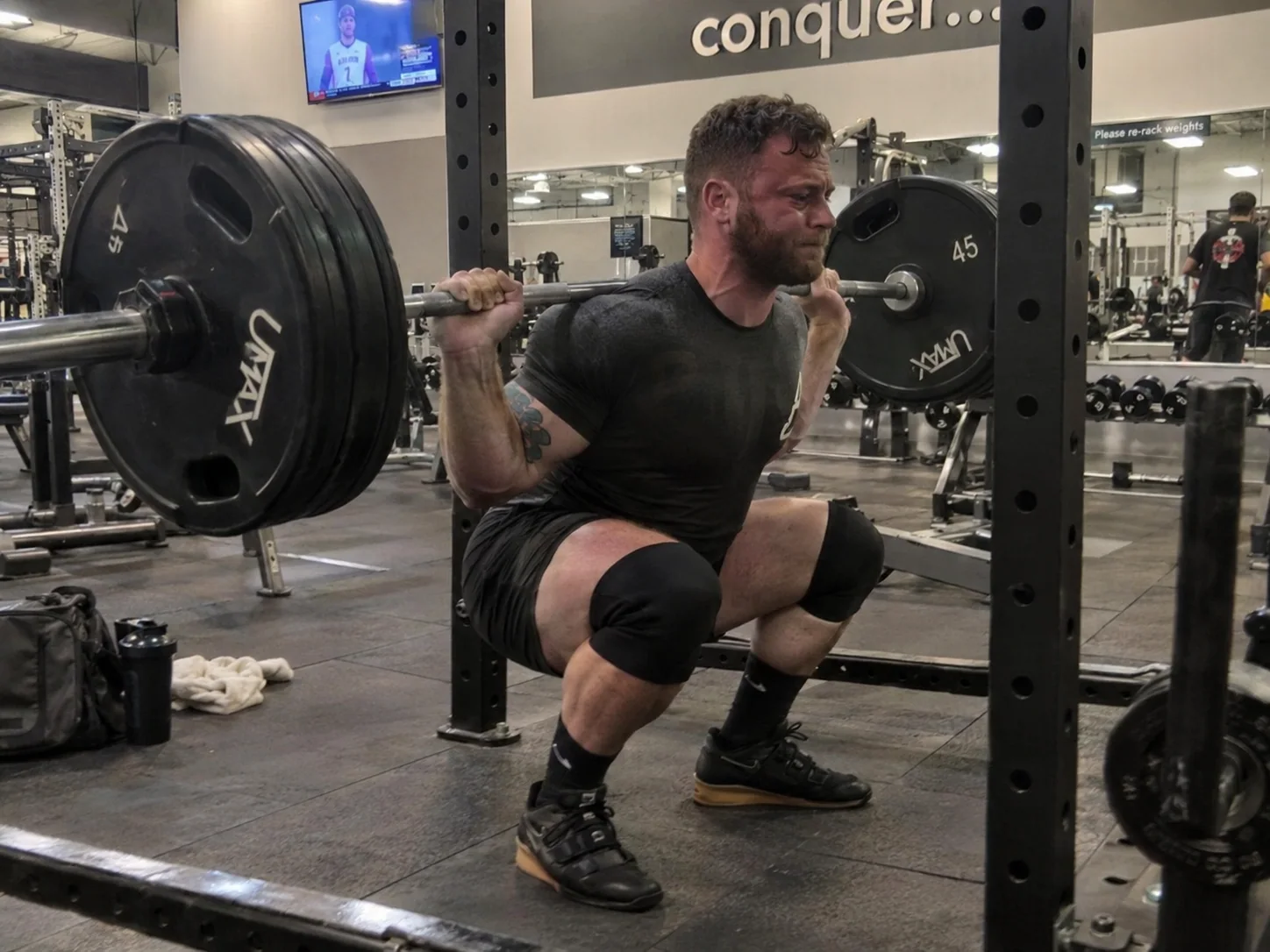
Training volume usually refers to the number of challenging sets performed for a muscle.
The 2026 ACSM position stand found hypertrophy was enhanced by higher weekly volumes, with approximately 10 or more weekly sets per muscle group identified as a useful evidence-based benchmark.
A newer dose-response meta-regression also found that muscle growth tends to increase as weekly volume increases, but with diminishing returns.
That distinction matters.
More training can produce more growth.
That does not mean unlimited training produces unlimited growth.
Start around 10 productive weekly sets per muscle if appropriate for your experience, then adjust according to:
- Strength and rep progression
- Soreness
- Joint tolerance
- Session performance
- Sleep and recovery
- Training experience
If additional sets destroy performance without producing progression, they are not automatically helping.
Read next: How Many Sets Per Muscle Per Week? Stop Wasting Your Training Volume
Use frequency to distribute that volume
Frequency is how often you train a muscle.
When weekly training volume is controlled, simply increasing frequency does not appear to meaningfully increase hypertrophy by itself.
Frequency is therefore primarily a programming tool.
Instead of forcing 12 hard chest sets into Monday, you might perform:
Monday: 6 sets
Thursday: 6 sets
You still complete 12 weekly sets, but the quality of those sets may be easier to maintain.
Training most muscles around twice per week works extremely well for many lifters, but it is not a magical requirement.
Read next: How Often Should You Train Each Muscle for Muscle Growth?
Train close enough to failure
Easy sets do not suddenly become hypertrophy training because they appear on a workout sheet.
Your working sets need to be challenging.
Evidence suggests that hypertrophy generally increases as sets are terminated closer to failure, but taking every set to absolute muscular failure is not necessary.
A practical approach is to perform most serious hypertrophy sets somewhere around 0–3 repetitions in reserve (RIR).
That means finishing a set believing you could perform approximately zero to three additional clean repetitions.
Failure can be used selectively, especially on stable isolation exercises.
You do not need to turn every squat, Romanian deadlift, press, and row into a survival test.
Read next: How Close to Failure Should You Train? RIR, RPE, and Training Intensity Explained
Rest long enough to perform
Short rest periods make workouts feel harder.
Harder does not automatically mean better.
A 2024 systematic review found a small potential hypertrophy advantage when inter-set rest exceeded 60 seconds, while differences appeared much smaller once adequate recovery was provided.
A practical starting point:
Compound exercises: around 2–3+ minutes.
Isolation exercises: around 1–2+ minutes.
If your performance is falling because you are still exhausted from the previous set, rest longer.
Read next: How Long Should You Rest Between Sets for Muscle Growth?
Choose exercises you can actually progress
The best hypertrophy exercise is not automatically the exercise that looks most impressive.
Good muscle-building exercises should:
- Train the intended muscle effectively
- Provide useful stability
- Allow progressive overload
- Use a productive range of motion
- Fit your structure and mobility
- Avoid unnecessary joint irritation
- Remain measurable over time
Consistency matters because you cannot meaningfully track progression if your exercise selection changes every week.
Read next: Exercise Selection for Muscle Growth
Use a productive range of motion
Full range of motion remains a strong default, but the discussion is more nuanced than “full reps good, partial reps bad.”
Research indicates that training muscles at longer muscle lengths—whether through full ROM or appropriately selected lengthened partials—can be particularly effective for hypertrophy in several muscle groups.
Build the foundation with controlled, repeatable range of motion before adding advanced partial-rep strategies.
Read next: Range of Motion for Muscle Growth: Full ROM vs Partial Reps
3. Recovery and Nutrition Turn Training Into Muscle

Training creates the stimulus.
Recovery allows adaptation.
You cannot continuously add more work while ignoring sleep, nutrition, fatigue, and performance.
Eat enough protein
Protein supplies the amino acids required to support muscle protein remodeling and growth.
A major meta-analysis found that additional protein supports gains from resistance training, with the average benefit appearing to level off around 1.6 grams of protein per kilogram of body weight per day.
For an 80 kg lifter:
80 × 1.6 = approximately 128 grams of protein per day.
You do not need to obsess over a tiny post-workout anabolic window.
Focus first on:
- Adequate total daily protein
- Sufficient overall food intake
- Consistent meals
- Training performance
- Long-term adherence
Watch your recovery trend
One bad workout means very little.
Several declining workouts in a row mean more.
Possible signs that fatigue is outrunning recovery include:
- Repeated loss of reps or strength
- Persistent joint irritation
- Soreness interfering with training
- Poor motivation
- Consistently reduced performance
- Difficulty recovering between sessions
Do not automatically solve every plateau by adding more training.
Sometimes the correct progression is better recovery.
Read next: Rest Days for Muscle Growth: How Many Do You Need?
When accumulated fatigue becomes excessive, a planned reduction in training stress can also be useful.
Read next: Deload Week: When to Take One, How to Do It, and Will You Lose Muscle?
How to Integrate This Into Your Training
You do not need an advanced bodybuilding program to apply these principles.
A simple four-day upper/lower split can cover everything.
Monday — Upper Body
Bench Press — 3 × 6–10
Chest-Supported Row — 3 × 6–10
Incline Dumbbell Press — 2 × 8–12
Lat Pulldown — 2 × 8–12
Lateral Raise — 3 × 10–20
Biceps Curl — 2 × 10–15
Triceps Extension — 2 × 10–15
Tuesday — Lower Body
Squat — 3 × 5–8
Romanian Deadlift — 3 × 6–10
Leg Press — 2 × 8–12
Leg Curl — 2 × 10–15
Calf Raise — 3 × 8–15
Wednesday — Recovery
Walking, mobility, light activity, or complete rest.
Thursday — Upper Body
Repeat the same movement patterns with complementary exercises.
Friday — Lower Body
Repeat the lower-body structure with appropriate exercise variations.
Weekend — Recovery
Keep most working sets challenging.
Track every workout.
When you reach the top of your target rep range with consistent technique, increase the load slightly and begin progressing again.
That is hypertrophy programming.
Stimulus. Effort. Volume. Progression. Recovery. Repeat.
What You Need to Keep in Mind
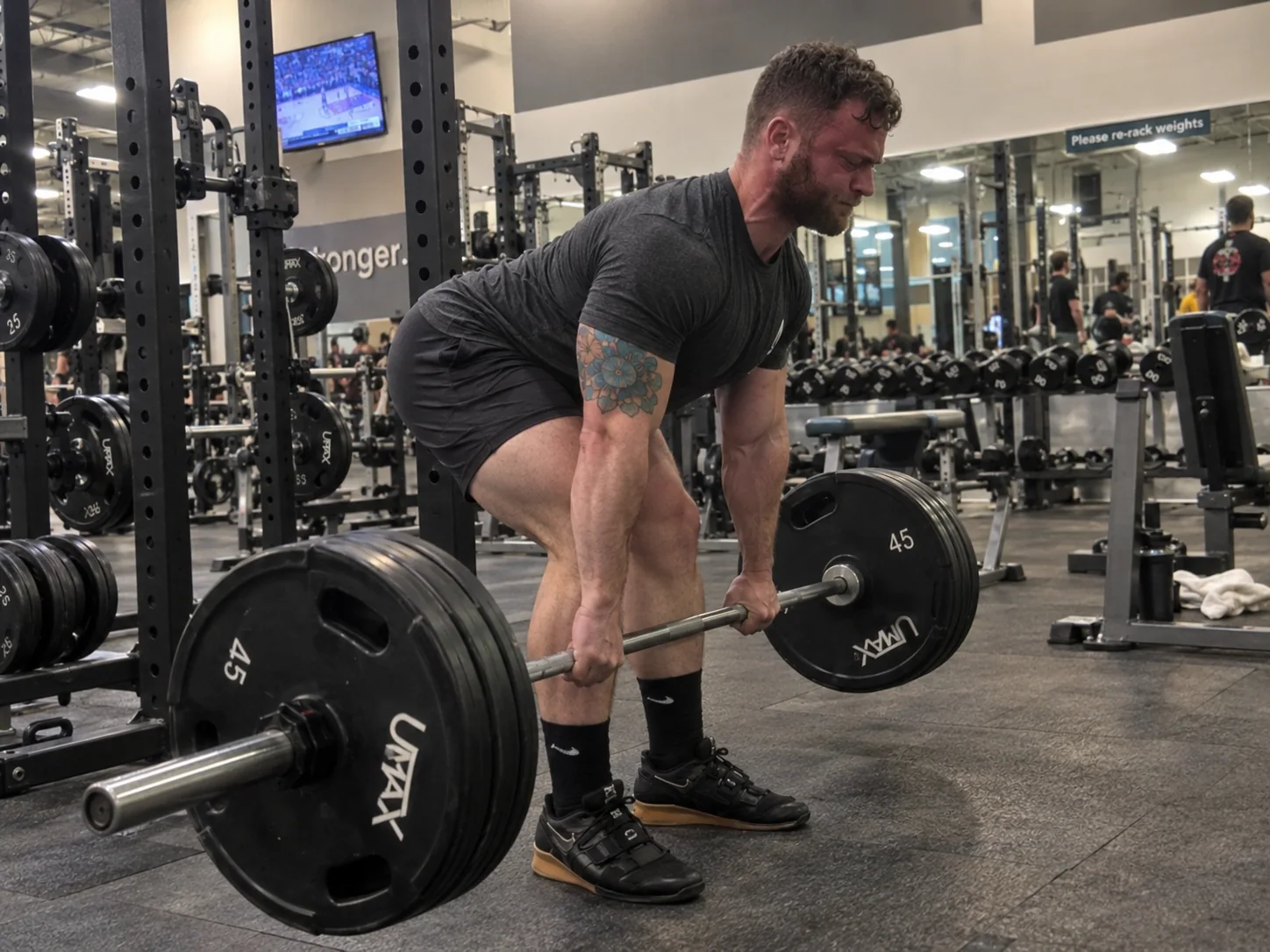
Building muscle does not require secret exercises, mandatory failure training, extreme soreness, or constantly changing programs.
It requires months and years of productive training.
Build around the fundamentals:
Train consistently.
Perform enough challenging weekly volume.
Take working sets close enough to failure.
Use exercises you can progressively overload.
Train through productive ranges of motion.
Rest long enough to maintain performance.
Eat enough protein and total food to support your goal.
Track your training.
Recover.
Then adjust based on what your performance tells you.
The best hypertrophy program is not the one with the most exercises or advanced techniques.
It is the one you can progress, recover from, and execute consistently enough to force adaptation over time.
FAQs
How do you build muscle?
Build muscle by consistently performing progressive resistance training, accumulating enough challenging weekly volume, training reasonably close to muscular failure, eating sufficient protein and energy, and recovering between sessions.
How many sets per muscle per week are best for muscle growth?
Around 10 challenging weekly sets per muscle is a useful evidence-based starting benchmark for many lifters. More volume can produce additional hypertrophy, but returns diminish and individual recovery capacity varies.
What is the best rep range for muscle growth?
There is no single mandatory hypertrophy range. Muscle can grow across a broad range of loads when sets are sufficiently challenging. Moderate ranges such as approximately 6–15 reps are particularly practical for combining stimulus, load, technique, and fatigue management.
Do you need to train to failure to build muscle?
No. Training closer to failure appears beneficial for hypertrophy, but absolute muscular failure is not required on every set. Most lifters can combine hard sets with controlled fatigue by finishing many working sets within a few repetitions of failure.
How often should you train each muscle?
Frequency mainly helps distribute weekly training volume. When volume is equated, simply increasing frequency does not appear to provide a large independent hypertrophy advantage. Training a muscle around twice per week is a practical setup for many people.
How much protein do you need to build muscle?
Around 1.6 g of protein per kilogram of body weight per day is a strong evidence-based target for many resistance-trained adults. Individual needs and circumstances vary.
How long does it take to build noticeable muscle?
Muscle growth takes time. Beginners typically progress faster than experienced lifters, but meaningful changes should be judged across months rather than individual workouts. Track body measurements, photos, repetitions, loads, and long-term performance trends.
Should you change exercises frequently to keep muscles guessing?
No. Muscles do not require constant exercise novelty. Keeping key exercises stable long enough to measure and produce progression makes it easier to determine whether your training is actually improving.
Sources
American College of Sports Medicine. Resistance Training Prescription for Muscle Function, Hypertrophy, and Physical Performance in Healthy Adults: An Overview of Reviews.
View the ACSM position stand on PubMed
Pelland JC, Remmert JF, Robinson ZP, et al. The Resistance Training Dose Response: Meta-Regressions Exploring the Effects of Weekly Volume and Frequency on Muscle Hypertrophy and Strength Gains.
Robinson ZP, Pelland JC, Remmert JF, et al. Exploring the Dose-Response Relationship Between Estimated Resistance Training Proximity to Failure, Strength Gain, and Muscle Hypertrophy.
Refalo MC, Helms ER, Trexler ET, et al. Influence of Resistance Training Proximity-to-Failure on Skeletal Muscle Hypertrophy.
Refalo MC, Hamilton DL, Paval DR, et al. Influence of Resistance Training Load on Measures of Skeletal Muscle Hypertrophy and Improvements in Maximal Strength.
Singer A, Wolf M, Generoso L, et al. Give It a Rest: The Effect of Inter-Set Rest Interval Duration on Muscle Hypertrophy.
Kassiano W, Costa B, Nunes JP, et al. Which ROMs Lead to Rome? A Systematic Review of the Effects of Range of Motion on Muscle Hypertrophy.
Morton RW, Murphy KT, McKellar SR, et al. Protein Supplementation and Resistance Training-Induced Gains in Muscle Mass and Strength in Healthy Adults.