Progressive Overload: How to Build Muscle and Strength
Progressive Overload: The Simple Training Principle Most Lifters Still Get Wrong
Progressive overload is one of the most important principles in strength training, muscle growth, and long-term performance. It is also one of the most misunderstood.
Most lifters think progressive overload means one thing: add more weight every week.
That is where progress starts to break down. The bar gets heavier, the reps get uglier, the range of motion gets shorter, joints start complaining, and eventually the lifter hits a plateau.
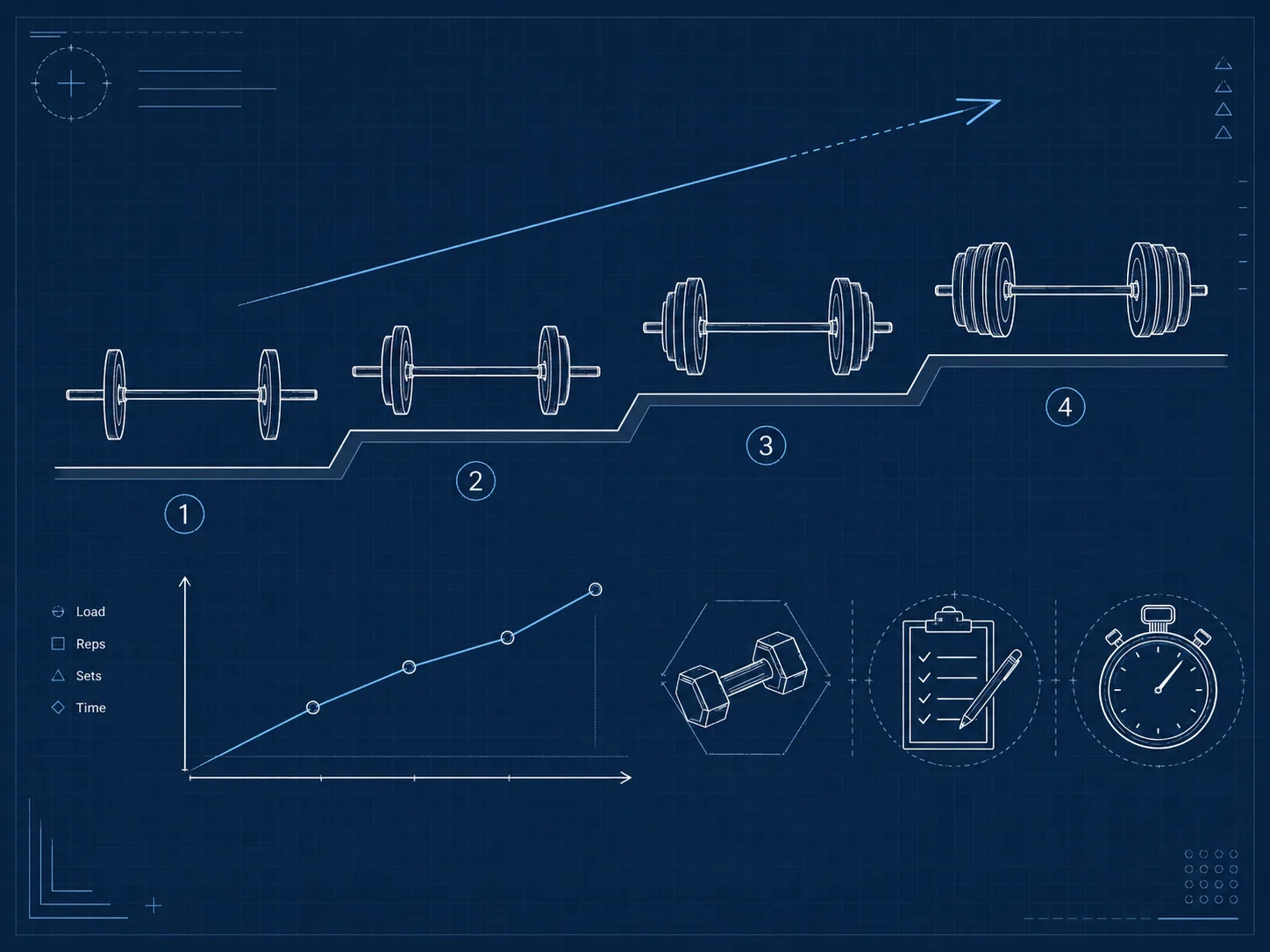
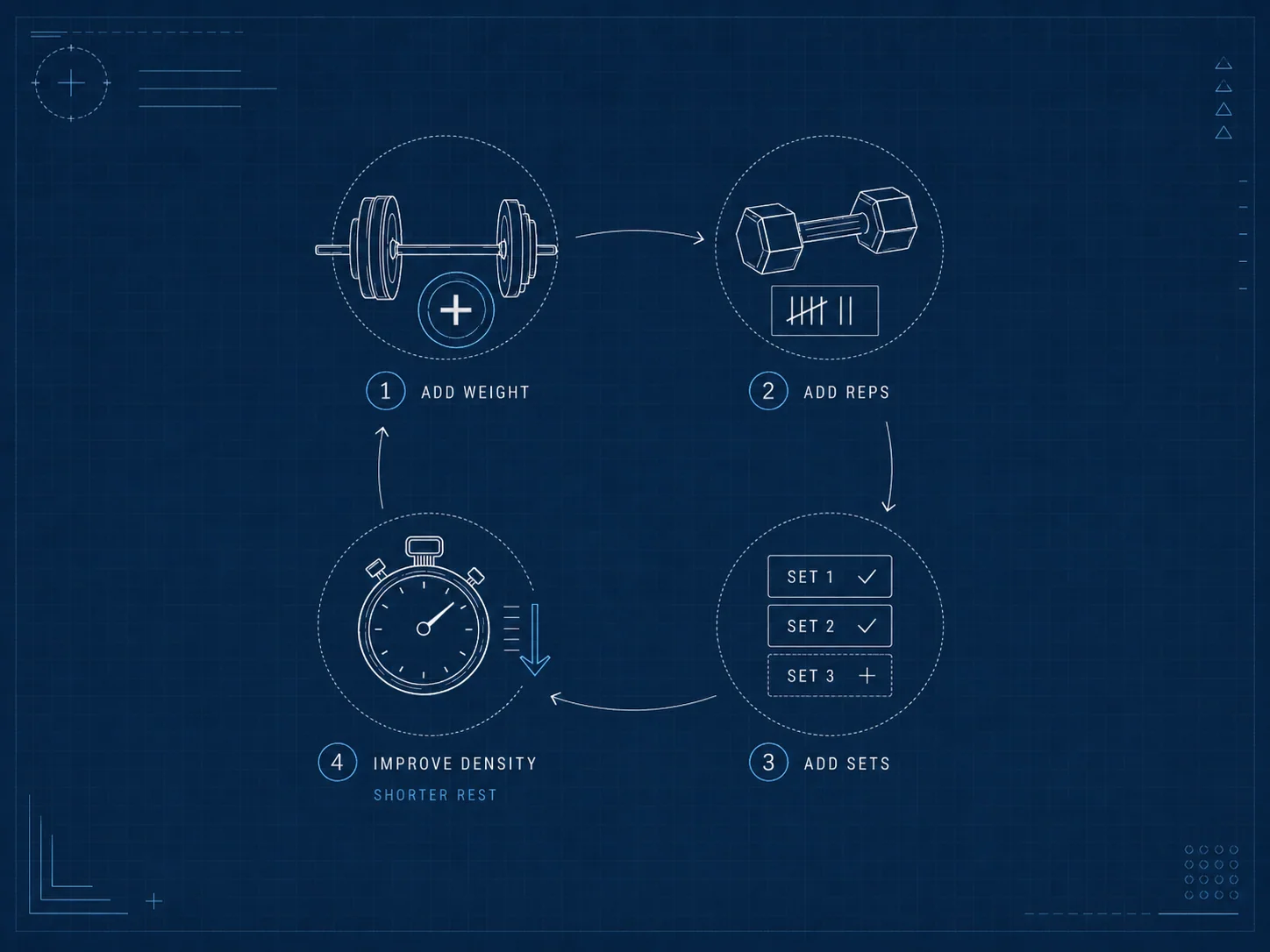
Real progressive overload is not ego lifting. It is the planned increase of training stress over time so your body has a reason to adapt. That stress can come from heavier loads, more reps, more sets, better control, improved range of motion, shorter rest periods, or cleaner execution. NSCA describes progressive overload as modifying training variables over time to keep driving adaptation and avoid stagnation.
The goal is simple: do more quality work over time while recovering well enough to keep progressing.
1. What progressive overload actually means
Progressive overload means gradually increasing the demand placed on your muscles, nervous system, and connective tissues so your body is forced to become stronger, bigger, or more efficient.
Your body adapts to the stress you repeatedly expose it to. If you bench press the same weight, for the same reps, with the same form, forever, your body eventually has no reason to keep changing. The workout may still feel productive, but it is no longer a strong enough signal for new growth.
That is why progressive overload matters. It gives your training direction.
But here is the key point most lifters miss:
Adding weight is only one form of progressive overload.
A 2022 study comparing load progression and repetition progression found that both methods appeared viable for improving muscular adaptations over an eight-week training cycle. In simple terms, getting stronger can come from adding weight, but it can also come from doing more reps with the same weight before increasing the load.
That matters because not every lift should be forced heavier every week. A deadlift, squat, or bench press may tolerate steady load jumps for a beginner, but isolation exercises, advanced lifts, and fatigued training blocks often need smaller, smarter progressions.
Progressive overload is not just about doing more. It is about doing more that you can actually recover from.
2. The best ways to apply progressive overload
The strongest lifters know how to progress without forcing the same method every session. Here are the main tools.
Add weight
This is the classic method.
Example:
Week 1: Bench press — 80 kg x 8
Week 2: Bench press — 82.5 kg x 8
This works best when your technique is stable, your range of motion stays consistent, and the heavier load does not turn clean reps into survival reps.
Use load progression heavily for strength-focused compound lifts, but do not let the weight increase destroy the movement.
Add reps
This is one of the cleanest overload methods for hypertrophy.
Example:
Week 1: Pull-ups — 3 sets of 6
Week 2: Pull-ups — 3 sets of 7
Week 3: Pull-ups — 3 sets of 8
You are using the same load but producing more total work. For many lifters, this is safer and more sustainable than adding weight too fast.
Add sets
Adding sets increases training volume.
Example:
Week 1: Dumbbell rows — 3 sets
Week 3: Dumbbell rows — 4 sets
Volume is a major programming variable for hypertrophy, but it has to be used with control. A 2022 umbrella review on resistance training variables found that factors such as volume, frequency, intensity, contraction type, and repetition duration can all influence hypertrophy outcomes.
More sets can build more muscle, but only if you can recover from them. Junk volume is not progressive overload. It is just fatigue.
Improve range of motion
If you squat deeper with the same weight and better control, that is progress.
If your dumbbell press gets a deeper stretch without losing shoulder position, that is progress.
More usable range of motion can increase the challenge on the target muscle without adding load.
Improve tempo and control
A controlled three-second lowering phase on a Romanian deadlift is harder than dropping the weight fast and bouncing into the next rep.
Tempo work forces better tension, better positioning, and better ownership of the lift.
Reduce rest time
Same weight. Same reps. Less rest.
That can be progressive overload, especially for hypertrophy, conditioning, and work-capacity goals. Use this carefully. For heavy strength work, cutting rest too aggressively can reduce performance and limit the quality of your sets.
Improve technique
This is the most underrated form of progress.
A cleaner squat with better depth, stronger bracing, and less knee cave is progress.
A stricter curl with no swinging is progress.
A better lat pulldown where the back does the work instead of the arms is progress.
If the load stays the same but the execution improves, your training has improved.
3. The progressive overload mistakes that stall muscle growth
Most lifters do not fail because progressive overload does not work. They fail because they apply it badly.
Mistake 1: Adding weight before you own the movement
If every load increase comes with worse form, shorter range of motion, and more joint stress, you are not progressing. You are just cheating the standard.
Your body adapts to what you actually do, not what is written in your logbook.
Mistake 2: Treating every workout like a max test
Progressive overload is not about proving strength every session. It is about building strength across weeks, months, and years.
Testing too often creates fatigue without enough productive training volume. You should leave the gym with momentum, not with your nervous system crushed every session.
Mistake 3: Ignoring recovery
Training creates the signal. Recovery allows the adaptation.
If your weights, reps, and sets keep going up while your sleep, nutrition, and rest stay poor, your performance will eventually crash.
The updated 2026 ACSM resistance training position stand reviewed evidence from 137 systematic reviews and more than 30,000 participants, reinforcing resistance training’s role in improving strength, hypertrophy, power, endurance, and physical performance across adulthood.
The takeaway: resistance training works, but it needs to be programmed and recovered from properly.
Mistake 4: Changing exercises too often
You cannot measure progression if your workouts are random.
Exercise variation has value, but if you change your movements every week, you lose the ability to track performance. Keep your main lifts consistent long enough to build skill, measure progress, and create adaptation.
Mistake 5: Chasing soreness instead of performance
Soreness is not the goal.
You can be sore from a bad workout, a new exercise, poor recovery, or excessive volume. Better indicators of progress include more reps, better technique, increased load, improved control, and stronger performance at the same effort level.
How to integrate
The easiest way to use progressive overload is with a double-progression model.
Choose a rep range, such as 8–12 reps.
Example: Dumbbell bench press
Week 1: 30 kg x 8, 8, 7
Week 2: 30 kg x 9, 8, 8
Week 3: 30 kg x 10, 9, 8
Week 4: 30 kg x 12, 11, 10
Week 5: Increase the weight and return to the lower end of the rep range
The rule is simple:
When you can hit the top of the rep range for all prescribed sets with clean form, increase the load.
Use this structure for most hypertrophy work. It gives you a clear target, protects technique, and stops you from increasing weight too early.
For strength-focused lifts, use smaller load jumps, longer rest periods, and fewer reps. For muscle growth, use rep progression, controlled tempo, enough weekly volume, and consistent execution. For beginners, the first goal is not maximum weight. It is learning the movement, repeating it consistently, and slowly building capacity.
Advanced lifters need even more control. Progress slows as you get stronger, so overload may come from one extra rep, a cleaner set, a small load increase, or a better training block — not dramatic weekly jumps.
What you need to keep in mind
Progressive overload is simple, but it is not reckless.
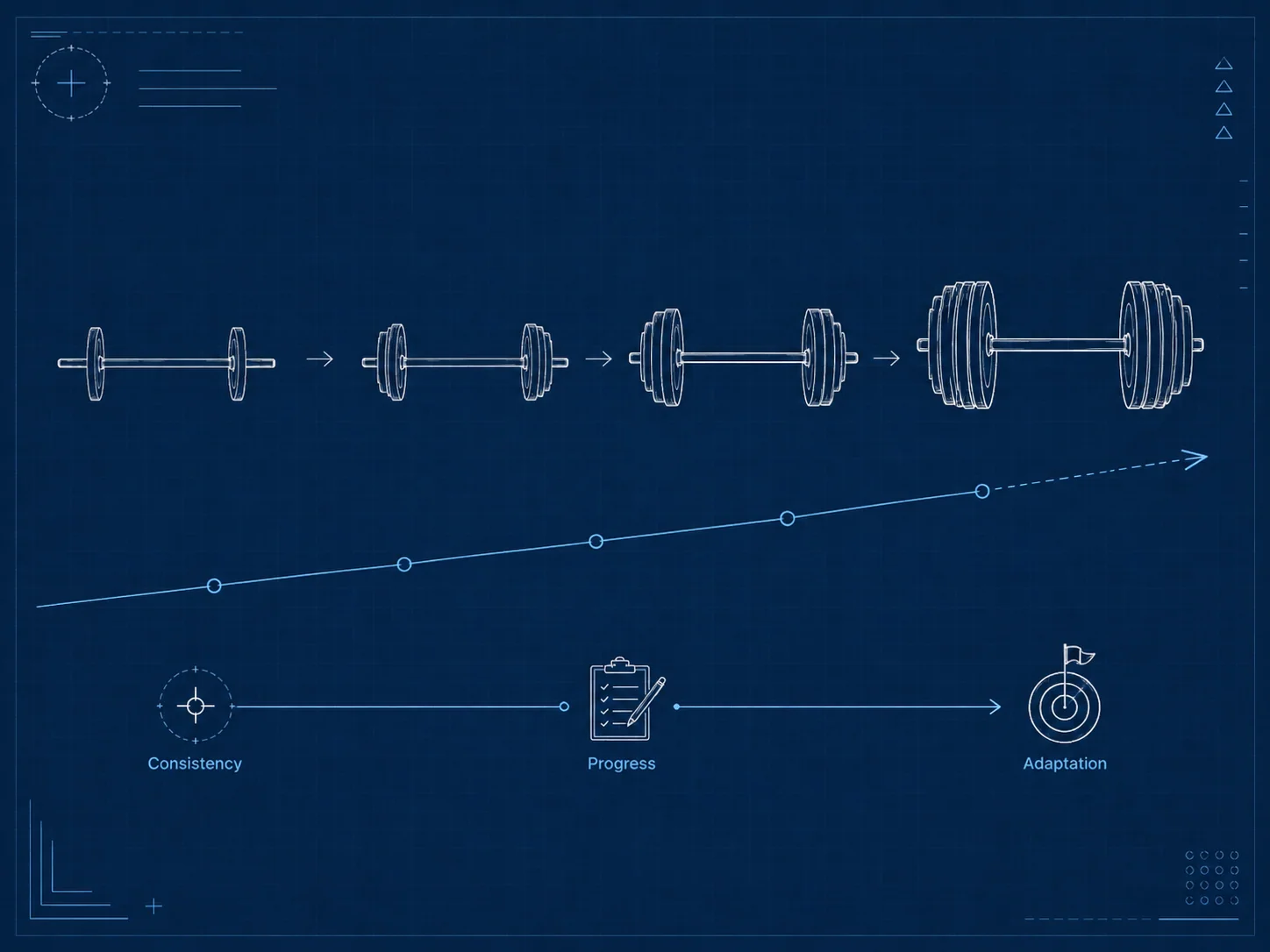
The goal is not to add weight at any cost. The goal is to create a stronger training stimulus while keeping your reps clean, your range of motion honest, and your recovery strong enough to support the next session.
Add weight when you are ready. Add reps when the load is not ready to move up. Add sets when you can recover from more volume. Improve technique every chance you get.
The lifter who progresses the longest wins — not the lifter who rushes the fastest.