Women's Hypertrophy Training: How to Build Muscle the Right Way
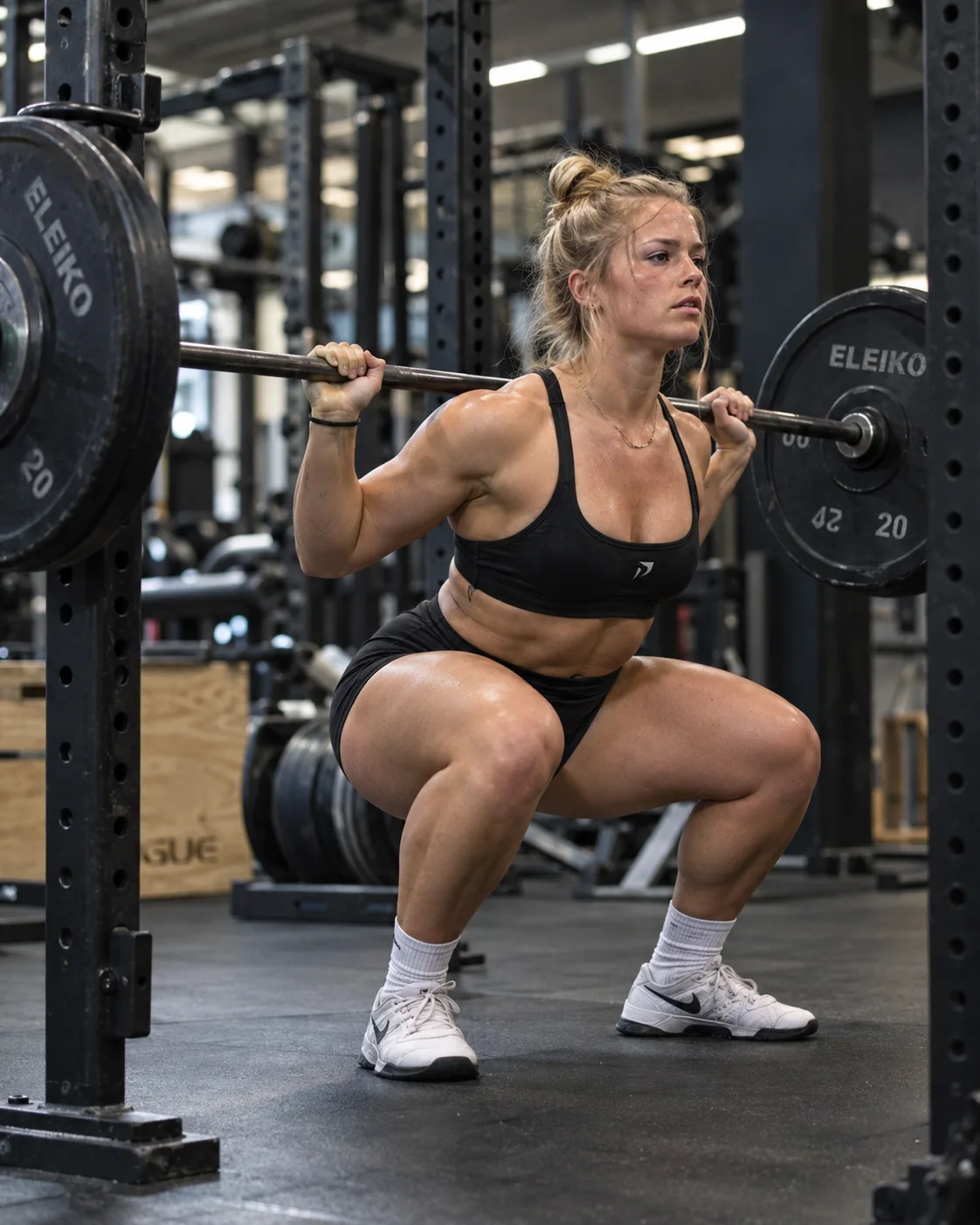
The short answer: Women build muscle through the same hypertrophy rules as men. Train most working sets within 1 to 3 reps of failure, get 9 to 20 hard sets per muscle each week, use progressive overload, eat roughly 1.6 to 2.2 grams of protein per kilogram of bodyweight, and recover properly. The biggest difference isn't biology. It's the light loads, aggressive calorie cuts, and fear-based programming that hold most women back.
More women are lifting real weights than ever before, and the same tired "tone and sculpt" advice keeps showing up anyway. High reps with tiny dumbbells. Glute-only circuits. A warning that touching a barbell will turn you into a bodybuilder by the weekend.
None of that is how muscle is built. If you're trying to build muscle as a woman, you need the same thing every lifter needs: hard, progressive strength training, enough protein, and patience.
The full set of rules, in one list, because they matter more than any special "female" workout:
- Train hard: most sets end 1 to 3 reps from failure.
- Progress: add weight or reps over time.
- Recover: sleep, eat, and don't bury yourself in junk volume.
- Eat protein: 1.6 to 2.2 grams per kilogram of bodyweight daily.
- Be consistent for months, not weeks.
This guide covers how women actually build muscle, what needs to be handled differently, and how to put it together in a program you can run.
1. The "Bulk" Fear Hurts Women's Muscle Growth More Than the Barbell
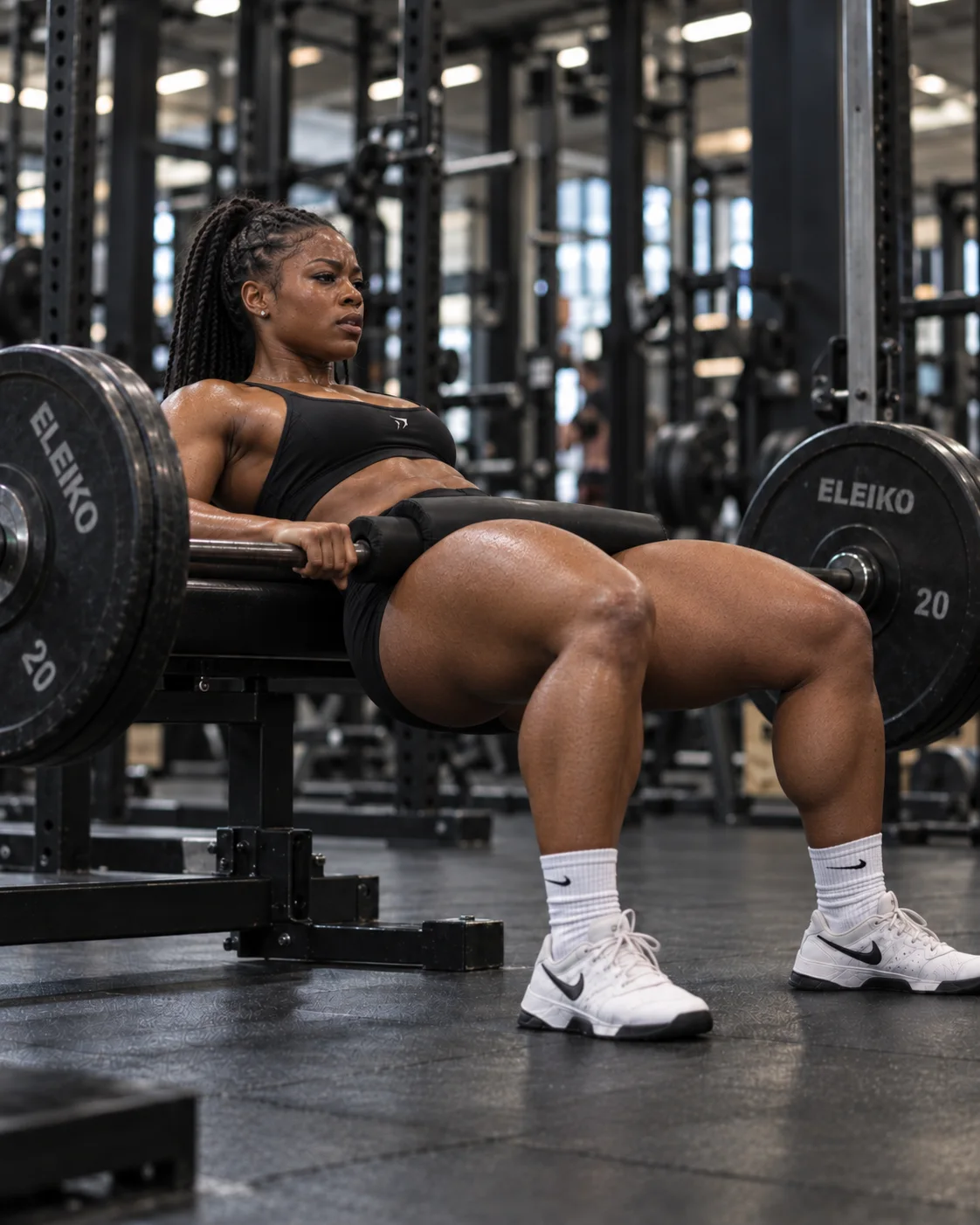
Let's handle the thing that keeps most women training small.
You will not wake up one morning looking like a bodybuilder by accident. That look takes years of deliberate, aggressive training, a calorie surplus, and usually a level of obsession most people don't have time for. Muscle growth is slow for everyone. For women it's slower on average because of lower starting muscle mass and lower testosterone. What hard hypertrophy training actually produces is shape, posture, strength, and a body that looks firmer at the same or higher weight.
Think of it this way. You don't avoid learning to drive because you might accidentally become a Formula 1 driver. You don't skip cooking because you might accidentally open a three-star restaurant. Muscle doesn't arrive by accident either.
The real risk is the opposite. Most women undershoot the load, stop 15 reps away from failure, and then wonder why the mirror hasn't changed after a year of "toning."
The coaching truth is this. A muscle that is never challenged close to its limit has no reason to grow. The "toned" look everyone wants is just lean muscle with low enough body fat to show it. You can't tone what you haven't built. So the first decision is to train like someone trying to grow muscle, not someone trying to avoid it.
That doesn't mean maxing out every session. It means picking loads that make the last few reps genuinely hard, and then making those loads heavier over time. Women lifting weights with real intensity isn't dangerous, and it won't blow up your frame. That single shift does more than any special exercise, booty band, or 20-minute circuit ever will.
2. How Women Actually Build Muscle: The Strength Training Rules That Work
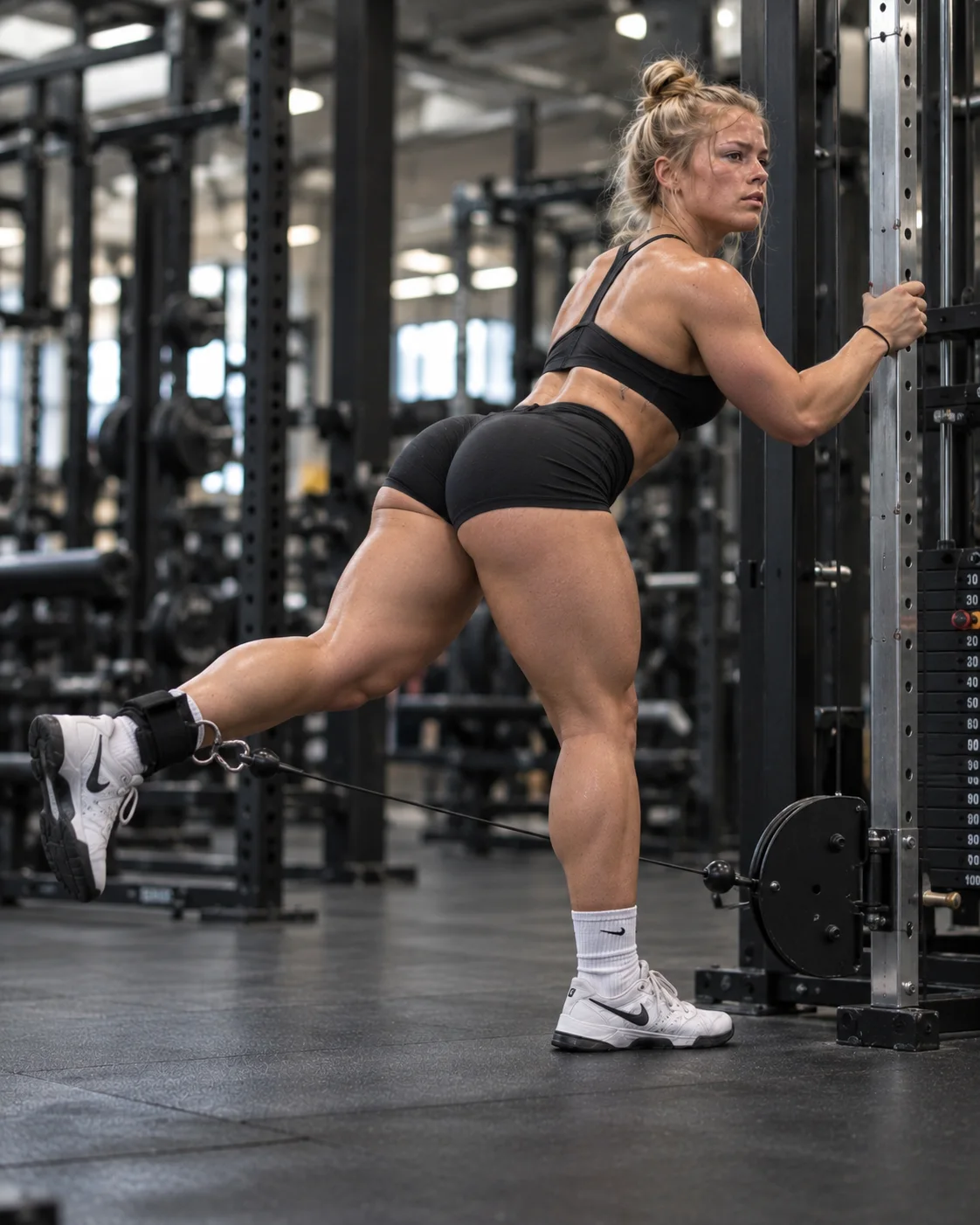
Hypertrophy doesn't care about your gender. It cares whether the muscle gets enough mechanical tension, enough volume, and enough recovery to adapt. The same rules in our full evidence-based hypertrophy guide apply here.
Progressive overload comes first. You need a reason for the muscle to adapt. Add weight, add reps, or add sets over time. If you did 8 reps with 30kg last month and you're still doing 8 reps with 30kg this month, nothing changed. Write your lifts down and make the numbers move.
Train close to failure. Leave about 1 to 3 reps in the tank on most working sets. Not every set to absolute failure, but close enough that the last reps slow down and feel hard. On your final rep the bar should move noticeably slower, and you could maybe grind out two more, but not cleanly. High-rep light circuits feel like work, but they don't create the tension that drives growth. This is the biggest execution fix I make with women, and it fixes more than any special exercise ever will.
Get the volume right. Roughly 9 to 20 hard sets per muscle group per week is a solid range for most people. Start lower, add only when progress stalls. More is not automatically better. Junk volume is just fatigue with extra steps.
Eat enough protein. Aim for 1.6 to 2.2 grams per kilogram of bodyweight. For a 65kg woman that's roughly 104 to 143 grams a day. Most women I coach are eating half that and trying to build muscle in a steep deficit. That combination doesn't work well. Check the full numbers in our protein guide.
Recover on purpose. Sleep seven or more hours, keep stress manageable, and don't train the same muscle hard every single day. Muscle grows between sessions, not during them.
Your split doesn't need to be different because you're a woman. Upper/lower, full body, push/pull/legs. Pick one you can actually do consistently and progress it. The best split is the one you won't quit.
3. Where Female Muscle Growth and Training Actually Differ
Now the parts that aren't just copied from the men's guide.
The menstrual cycle doesn't require a full reprogram. A 2023 umbrella review concluded it's premature to say short-term hormonal fluctuations meaningfully change strength performance or muscle growth. An earlier systematic review and meta-analysis found the effects are trivial at best and vary heavily between women. So train consistently, rate how you feel, and adjust load on the hard days instead of skipping the whole week. Don't let cycle talk become a reason to do nothing.
Creatine is one of the few supplements worth your money. A 2021 review in Nutrients found creatine appears effective for improving strength and exercise performance in pre-menopausal women, and women actually have 70 to 80 percent lower natural creatine stores than men. The ISSN evidence review confirms 3 to 5 grams a day is well tolerated. The research pool for women is smaller and more mixed than for men, so I won't oversell it. But the safety and practical upside make it the one supplement I'd add after protein and the basics are handled. The old fear about bloating is overblown at a standard dose.
Body composition matters more than the scale. If you're training hard and eating enough protein, the scale can stall while your waist shrinks and your glutes, back, and shoulders change shape. Use photos, how clothes fit, and gym performance as your primary feedback. The scale is the worst judge of a recomp.
The mistakes are also different. These are the ones I see most often. Too little protein, thanks to years of "eat less" messaging. Too much cardio in a big deficit while trying to build. Loads that haven't changed in months. Training to failure on every single set and burying recovery. Program-hopping every three weeks. Fear of eating more when training volume goes up.
Fix those and you don't need a special "female" program. You need a program that's hard, consistent, and progressive.
How to Integrate This Into Your Training
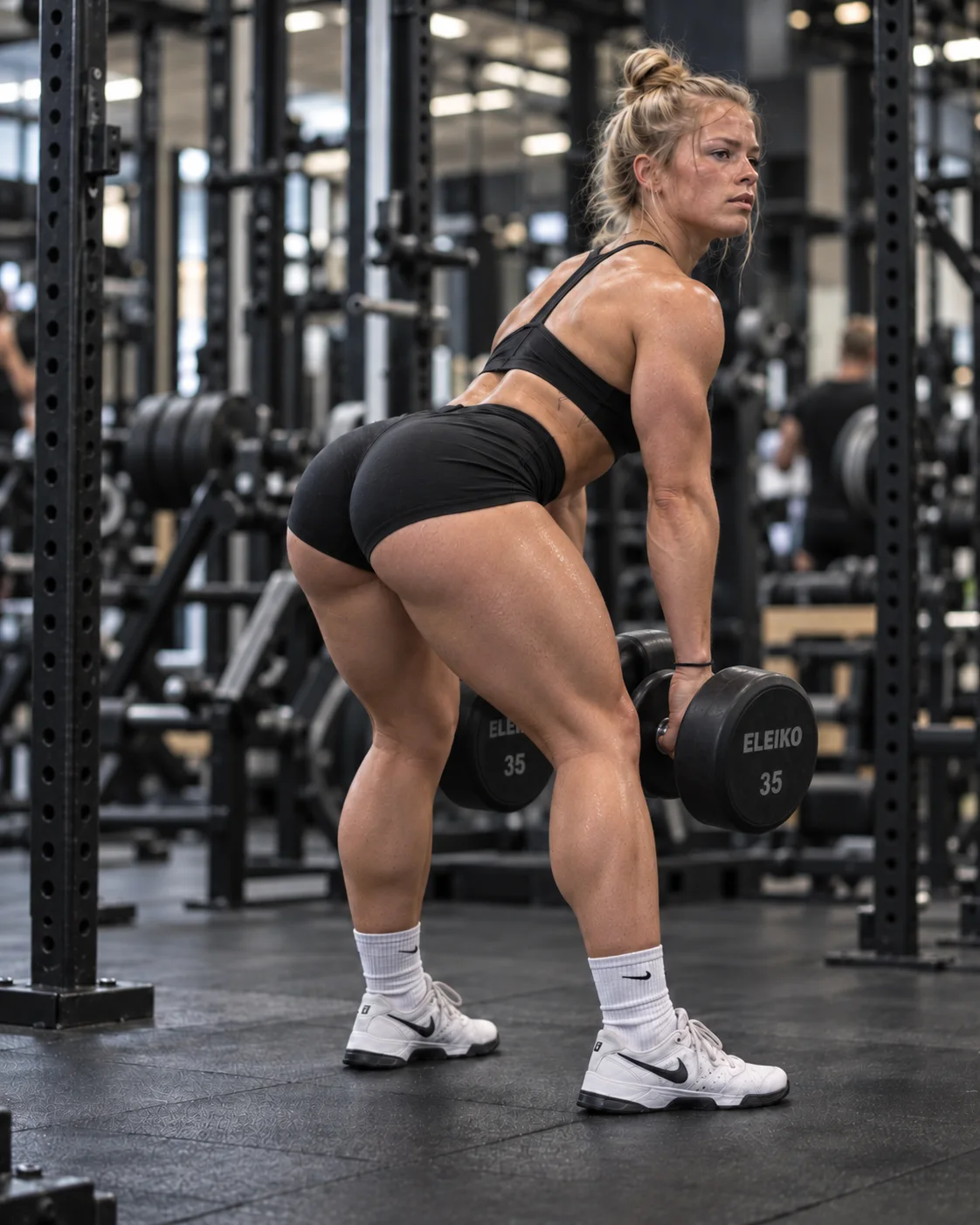
A practical setup looks like this, not a fantasy.
Pick a 3 or 4 day split. Three full-body days or four upper/lower days both work. Train each muscle group roughly twice a week.
Build it around compound lifts. Squat, hinge (Romanian deadlift or hip thrust), press, row, and a pull-up or pulldown variation. Add isolation work for the muscles you care about most, like glutes and shoulders, after the compounds. Exercise selection matters more than the number of movements.
Track three things: your loads on key lifts, your protein, and your sleep. That's the entire dashboard. If those three move in the right direction, you're building.
Progress with a simple rule. Hit the top of your rep range with clean form and 1 to 2 reps left? Add weight next session. Can't hit the bottom of the range? Keep the weight and build reps. That's progressive overload without an app or a spreadsheet.
Don't let cardio eat your progress. Cardio is good for health and recovery, but if building muscle is the goal, keep it to two or three shorter sessions a week, pick low-impact options, and lift first. Here's the full cardio and muscle growth breakdown.
Eat in a small surplus or at maintenance if you're lean enough. If you're carrying more body fat and want to recomp, keep protein high and stay near maintenance. You don't need to bulk into a food coma to build as a beginner or intermediate. Use the calorie guide to set the number.
Train through a full range of motion on most exercises. Partial reps have their place, but full range of motion should be the default for the muscles you're trying to grow. See full ROM vs partial reps.
What You Need to Keep in Mind
Women's hypertrophy training isn't a different sport. It's the same sport with a different set of cultural baggage and a few practical adjustments.
The women who get the results everyone wants are the ones who stop under-loading, stop under-eating protein, and stop treating the menstrual cycle or the fear of bulk as reasons to train soft. They pick hard exercises, progress them, eat, sleep, and repeat for months. That's the entire secret, and it isn't a secret at all.
Your next step is boring on purpose. Open your current program. Check whether you're within 1 to 3 reps of failure on your working sets. Check whether you're actually adding weight over time. Check your protein. Fix the weakest of those three and keep training. The shape you want is built one hard, progressive session at a time.
FAQs
Will lifting heavy make me bulky?
No. Muscle growth is slow and requires deliberate effort and usually a calorie surplus. You'll get firmer and more defined, not accidentally huge.
How much protein do women need to build muscle?
Aim for 1.6 to 2.2 grams per kilogram of bodyweight per day. For most women that's roughly 100 to 140 grams, depending on size.
Do women need a different training split than men?
No. The same splits work. The differences are in execution, load progression, and recovery management, not in the split itself.
Should I train differently around my menstrual cycle?
Not in a rigid way. The current evidence doesn't support hard phase-based reprogramming. Track how you feel and adjust load on low-energy days, but keep training.
Is creatine safe for women?
Yes. Three to five grams a day is safe and well tolerated. The evidence in women is smaller and more mixed than in men, but the risk is low and the practical upside is real.
How long until I see muscle growth?
Visible changes usually take 8 to 12 weeks of consistent training with proper protein and recovery. Strength often improves first, before the mirror catches up.
Sources Used
- How to Build Muscle: The Evidence-Based Hypertrophy Guide
- How Much Protein Do You Need to Build Muscle? Evidence-Based Guide
- Exercise Selection for Muscle Growth
- Range of Motion for Muscle Growth: Full ROM vs Partial Reps
- Cardio and Muscle Growth: How to Combine Cardio and Lifting Without Killing Gains
- How Many Calories Do You Need to Build Muscle Without Gaining Too Much Fat?
- Colenso-Semple et al., 2023 – Current evidence shows no influence of women's menstrual cycle phase on acute strength performance or adaptations to resistance exercise training
- McNulty et al., 2020 – The Effects of Menstrual Cycle Phase on Exercise Performance in Eumenorrheic Women
- Smith-Ryan et al., 2021 – Creatine Supplementation in Women's Health: A Lifespan Perspective
- Antonio et al., 2021 – Common questions and misconceptions about creatine supplementation