Range of Motion for Muscle Growth: Full ROM vs Partial Reps
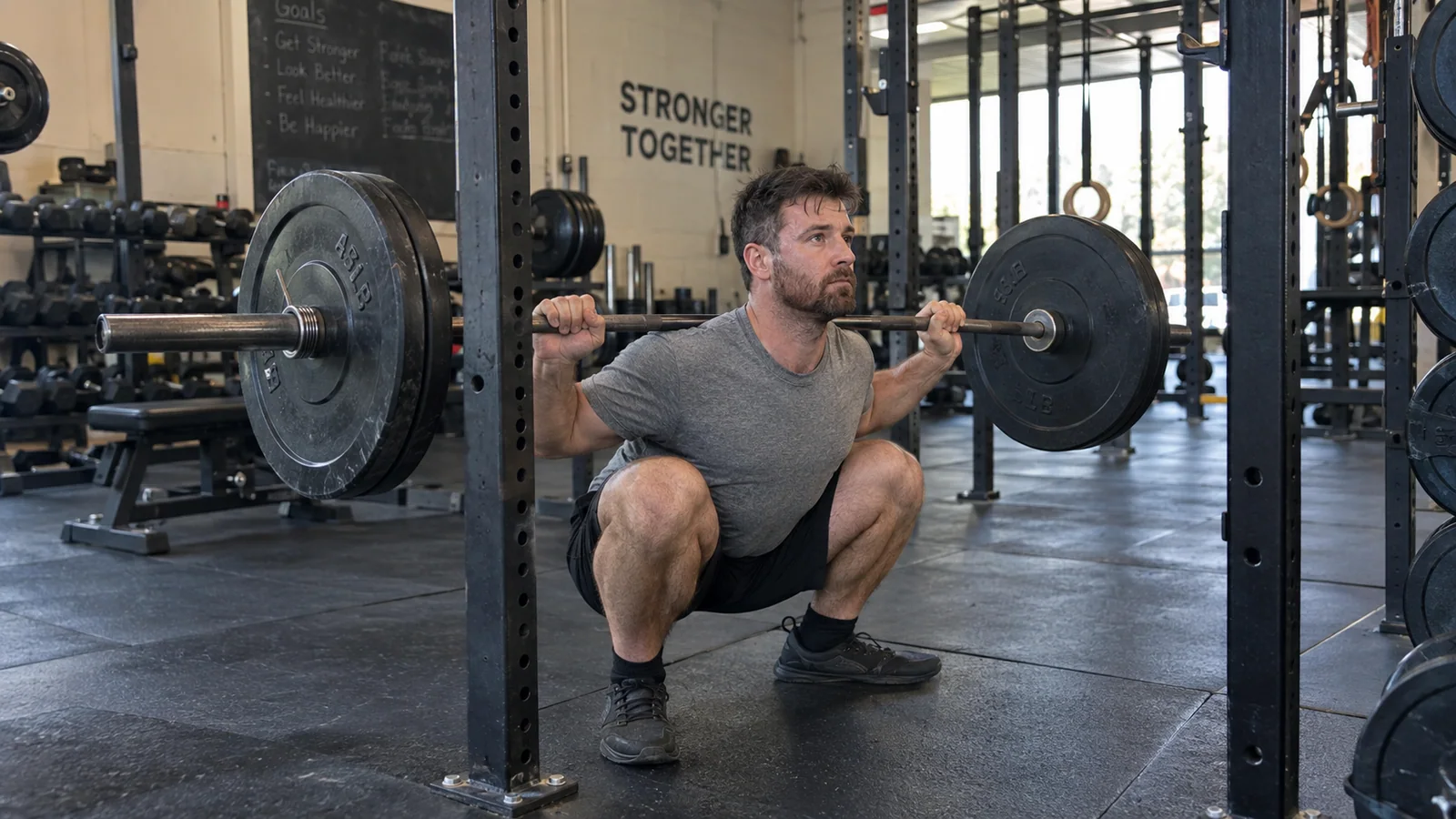
Does full range of motion build more muscle than partial reps?
For most lifters, full range of motion should remain the default. It trains the muscle through a larger movement range and usually exposes it to meaningful tension in the stretched position. But partial reps are not automatically inferior.
The key distinction is where the partial repetition occurs.
Research increasingly suggests that partial reps performed at longer muscle lengths — often called lengthened partials — can produce similar hypertrophy to full-ROM training in some exercises. Short partials performed mainly in the contracted position appear less compelling for muscle growth. (pubmed.ncbi.nlm.nih.gov)
So the real question is not simply full reps or partial reps?
It is:
Are you loading the target muscle effectively through a productive range of motion, especially where that muscle is lengthened?
1. What Range of Motion Means for Muscle Growth
Range of motion, or ROM, describes how far a joint moves during an exercise.
Take a preacher curl.
A full-ROM repetition moves through most of the controllable elbow-flexion range used for that exercise.
A partial repetition deliberately trains only part of that movement.
But partial reps can be performed in very different positions.
A lengthened partial emphasizes the part of the movement where the target muscle is relatively stretched.
A shortened partial emphasizes the portion where the muscle is relatively contracted.
That difference matters.
A major systematic review comparing full and partial ROM found that full-ROM resistance training produced greater lower-body hypertrophy overall than partial-ROM training. However, many older partial-ROM studies did not specifically focus on training at long muscle lengths. (pubmed.ncbi.nlm.nih.gov)
More recent research gives us a more useful picture.
A 2023 systematic review found that full ROM and partial ROM performed at longer muscle lengths generally produced better hypertrophy outcomes than partial repetitions performed predominantly at shorter muscle lengths across several examined muscle groups. (pubmed.ncbi.nlm.nih.gov)
That changes how we should think about partial reps.
The problem is not necessarily that the repetition is partial.
The problem may be which part of the repetition you remove.
If you shorten an exercise by removing most of the loaded stretch and only perform the easiest part of the movement, you may also remove part of the stimulus you actually want.
Full ROM vs lengthened vs shortened partials
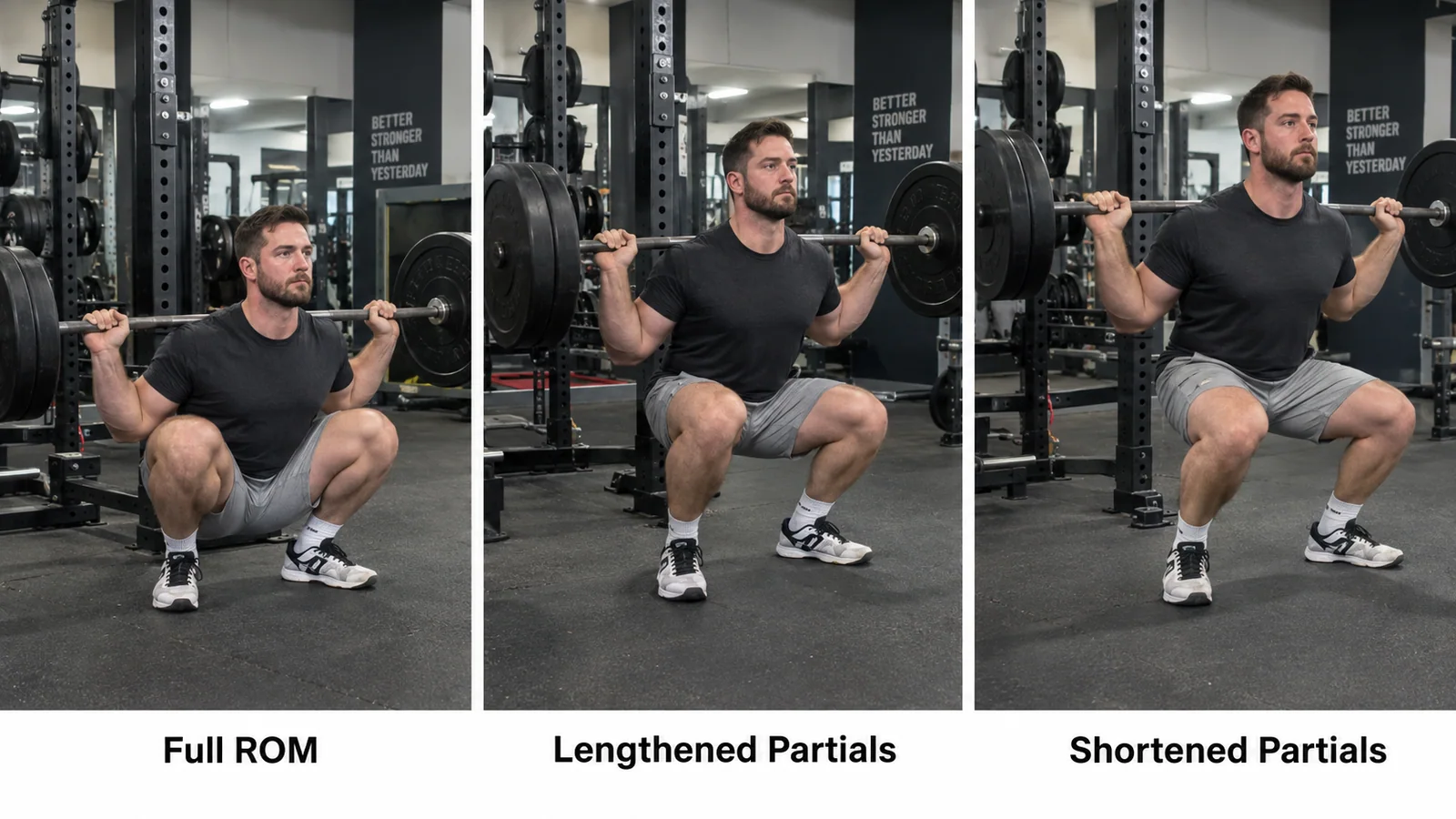
| Method | What it does | Hypertrophy use |
|---|---|---|
| Full ROM | Trains through a large controllable movement range | Best default for most exercises |
| Lengthened partials | Emphasize the portion where the muscle is relatively stretched | Strong hypertrophy option and useful advanced tool |
| Shortened partials | Emphasize the contracted portion of the movement | Can have specific uses, but generally less compelling as a hypertrophy default |
The practical lesson is simple:
Do not shorten your range of motion just so you can lift more weight.
Use the range that gives the target muscle meaningful tension, stable technique, and progression you can actually measure.
2. Full ROM vs Partial Reps: What Does the Research Show?
Historically, the evidence favored full range of motion over generic partial-ROM training for hypertrophy.
That is still a reasonable starting point.
Full-ROM training exposes the muscle to multiple lengths, develops strength across a broader movement range, and makes it harder to disguise stalled progress by gradually shortening repetitions.
It also usually includes the lengthened portion of the exercise.
And that stretched position appears increasingly important.
A 2025 systematic review examining resistance training at longer versus shorter muscle lengths concluded that training at longer muscle lengths may produce greater muscle growth, although the authors also emphasized that the evidence is mixed and that important questions remain unresolved. (pubmed.ncbi.nlm.nih.gov)
A separate 2025 systematic review and meta-analysis examining regional hypertrophy found only small overall differences, but the effects of longer-muscle-length training showed an increasing trend toward distal muscle regions. (pubmed.ncbi.nlm.nih.gov)
That means we should avoid two extremes.
The first is:
“Always use full ROM because partial reps do not build muscle.”
That is too simplistic.
The second is:
“Lengthened partials are scientifically proven to be better than full ROM.”
That also goes beyond the evidence.
In resistance-trained participants, a 2025 randomized trial found similar improvements in muscle thickness between full-ROM training and lengthened partial repetitions during an eight-week upper-body program. (pubmed.ncbi.nlm.nih.gov)
A larger multi-site trial also found that differences between full-ROM and lengthened-partial training for muscle cross-sectional area were small, supporting the idea that both approaches can be effective. (pubmed.ncbi.nlm.nih.gov)
And in 2026, another study reported similar hypertrophy when comparing long-muscle-length partial knee-extension training with full-ROM training under the conditions tested. (pubmed.ncbi.nlm.nih.gov)
The evidence is therefore becoming more consistent on one point:
Lengthened partials can build muscle. Full ROM can build muscle. Neither method currently deserves to replace the other across every exercise.
3. Are Lengthened Partials Better for Hypertrophy?
Lengthened partials have become popular because they deliberately keep the muscle working around the stretched portion of an exercise.
Examples include:
- Working through the bottom portion of a preacher curl
- Training the deeper portion of a calf raise
- Emphasizing the overhead stretch during a pulldown
- Working through the stretched portion of certain triceps-extension variations
This is different from performing random quarter reps with more weight than you can control.
A lengthened partial has an actual programming purpose.
Recent evidence in trained lifters supports the idea that these repetitions can stimulate substantial hypertrophy. One 2025 preacher-curl study found broadly similar muscle growth between full-ROM and long-muscle-length partial training, with only small regional differences between conditions. (pubmed.ncbi.nlm.nih.gov)
That makes lengthened partials useful.
It does not make them mandatory.
Full ROM already exposes the muscle to the stretched position when the exercise is selected and performed appropriately.
The better question is therefore:
Can lengthened partials improve this particular exercise or set?
Sometimes the answer is yes.
They can be especially useful when:
- The exercise remains stable in the lengthened position
- You can control the eccentric portion
- The target muscle stays meaningfully loaded
- Joint position remains comfortable
- You want to extend a set after clean full-ROM repetitions become difficult
They become less useful when they simply turn an exercise into uncontrolled bouncing, eliminate repeatable technique, or let you use loads you cannot actually control.
More weight on the stack does not automatically mean more hypertrophy.
Mechanical tension still has to reach the muscle you are trying to train.
How to integrate range of motion into your training
Use controlled full ROM as your baseline.
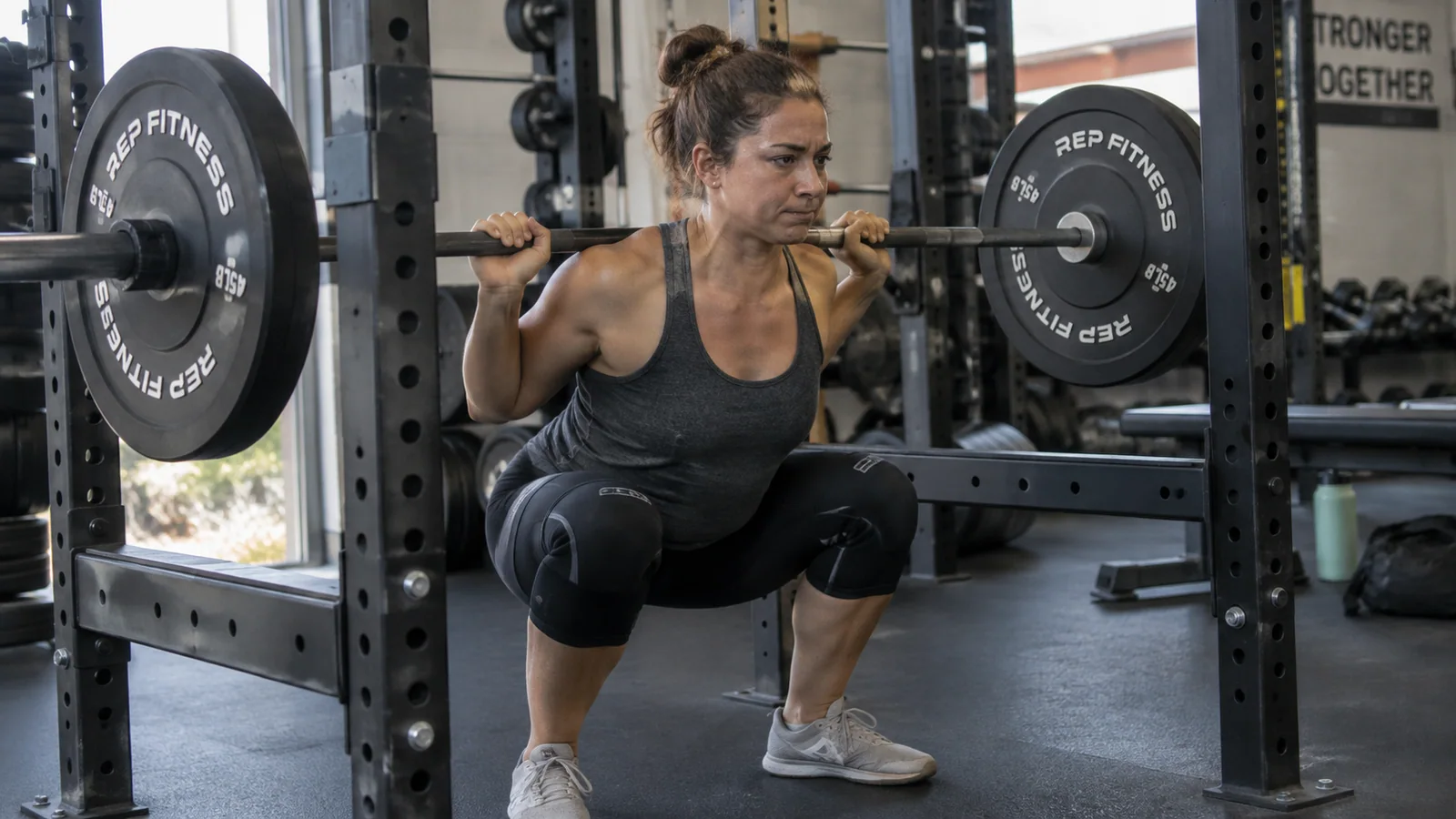
Your full range does not need to mean forcing every joint into the largest anatomically possible position.
It means using the largest productive range you can control for that exercise while maintaining stable technique and keeping the target muscle loaded.
Then introduce lengthened partials strategically.
Option 1: Use full ROM for the entire set
This should remain your default.
Perform every repetition through a consistent range and progressively improve load, repetitions, execution, or total work over time.
That also makes your progressive overload easier to measure.
Option 2: Add lengthened partials after full-ROM reps
Perform your normal full-ROM set.
When another complete repetition is no longer available without breaking technique, perform a small number of controlled repetitions through the lengthened portion.
For example:
Preacher curl: complete your normal repetitions, then perform controlled partials around the lower portion of the curl.
Calf raise: continue working through the lower portion with a deliberate stretch rather than bouncing off the bottom.
Lat pulldown: after full repetitions become difficult, use controlled partials closer to the overhead position if the machine setup keeps meaningful tension there.
This is an intensification technique, not something every set requires.
Your existing decisions around training close to failure, recovery, and weekly volume still matter.
Option 3: Program lengthened partials as their own sets
Experienced lifters can also dedicate selected sets to lengthened-partial training.
This works best on exercises that are stable, easy to standardize, and allow you to clearly identify the stretched portion.
Machines and isolation exercises are often easier to control than complex free-weight lifts.
Do not turn every squat, press, row, curl, and extension into partial-ROM training.
Your exercise selection for muscle growth still matters more than chasing one advanced technique.
Keep your reps standardized
Whatever ROM you choose, make it repeatable.
If repetition one is deep and repetition ten is half the distance because you are fatigued, your performance becomes difficult to track.
That matters because hypertrophy programming depends on knowing whether you are actually progressing.
Combine consistent ROM with an appropriate rep range for muscle growth and enough weekly training volume to create a complete progression strategy.
What you need to keep in mind
Full range of motion remains the best general starting point for muscle growth.
But the old idea that every partial repetition is automatically inferior no longer fits the evidence.
Where the partial occurs matters.
Training a muscle at longer lengths appears to be highly productive for hypertrophy, and recent studies show that lengthened partial repetitions can produce muscle growth comparable to full-ROM training in certain exercises and populations. (pubmed.ncbi.nlm.nih.gov)
That does not mean you need to rebuild your entire program around lengthened partials.
Use full ROM where it works well.
Choose exercises that load the muscle effectively through useful ranges.
Progress those movements consistently.
Then use lengthened partials when they provide a clear reason to exist — not because they are the latest hypertrophy trend.
Your results will still depend on the fundamentals:
good exercise selection, sufficient weekly volume, appropriate effort, consistent technique, recovery, and progressive overload.
Range of motion is another variable to optimize.
It is not a shortcut around the rest of your training.
FAQs
What is the best range of motion for muscle growth?
For most lifters, a controlled full range of motion is the best default. Evidence also suggests that training at longer muscle lengths is important, and lengthened partials can produce similar hypertrophy to full ROM in some circumstances. (pubmed.ncbi.nlm.nih.gov)
Are partial reps good for hypertrophy?
They can be. Partial reps performed at longer muscle lengths appear considerably more promising than partials performed mainly in shortened positions. The exact effect depends on the exercise, muscle group, range trained, and program. (pubmed.ncbi.nlm.nih.gov)
Are lengthened partials better than full ROM?
Current research does not support claiming that lengthened partials are universally superior. Several recent studies have found similar hypertrophy between lengthened-partial and full-ROM training. (pubmed.ncbi.nlm.nih.gov)
What are lengthened partial reps?
Lengthened partials are repetitions performed through the portion of an exercise where the target muscle is relatively stretched. Instead of completing the entire repetition, you repeatedly train through that longer-muscle-length portion.
Should beginners use partial reps?
Beginners are better served by first learning stable, repeatable full-ROM technique. Once exercise execution and effort management are consistent, lengthened partials can be introduced strategically.
Can I do partial reps after reaching failure?
You can use controlled lengthened partials after you can no longer complete another clean full-ROM repetition on suitable exercises. This extends the set and increases fatigue, so it should be treated as an advanced intensification technique rather than a requirement.
Do deeper reps always build more muscle?
Not automatically. More range is only useful when you can control it and the target muscle remains appropriately loaded. Forcing excessive depth at the expense of joint comfort, stability, or technique is not the goal.
Sources
Effects of Range of Motion on Resistance Training Adaptations — Systematic Review and Meta-Analysis
Which ROMs Lead to Rome? A Systematic Review of Range of Motion and Muscle Hypertrophy
Lengthened Partial Repetitions vs Full Range of Motion in Resistance-Trained Individuals
Partial Range, Full Gains? Long-Muscle-Length Partial Training in Trained Individuals
Does Longer-Muscle-Length Resistance Training Cause Greater Longitudinal Growth?
Effects of Lengthened-Partial ROM Training on Arm and Thigh Muscle Area
2026 Study: Long-Muscle-Length Partial ROM vs Full ROM Training