Home Gym Equipment for Beginners: The 4-Piece Kit That Covers 12 Weeks
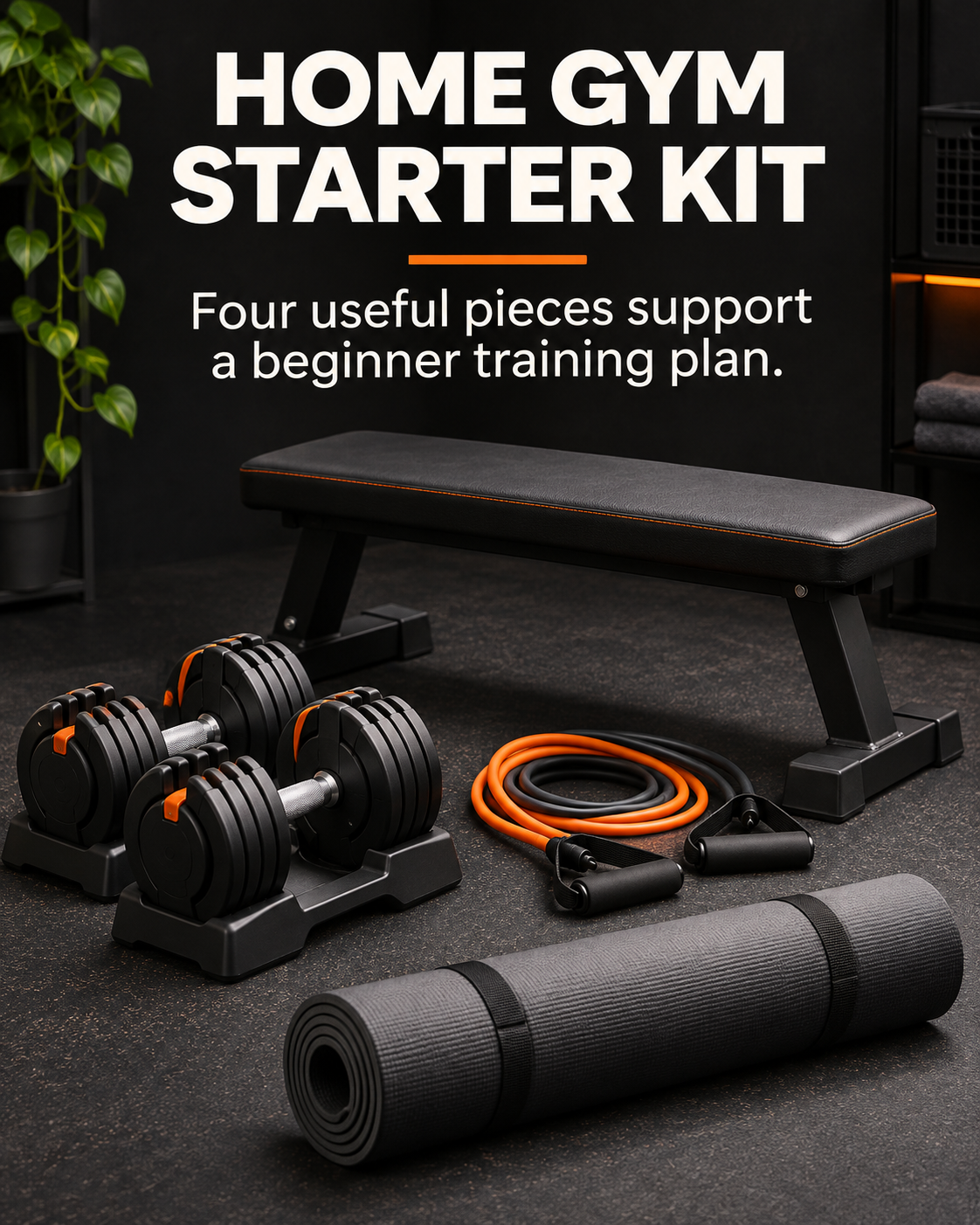
Home gym starter kit. Four useful pieces support a beginner trainingHome gym starter kit. Four useful pieces support a beginner training plan.
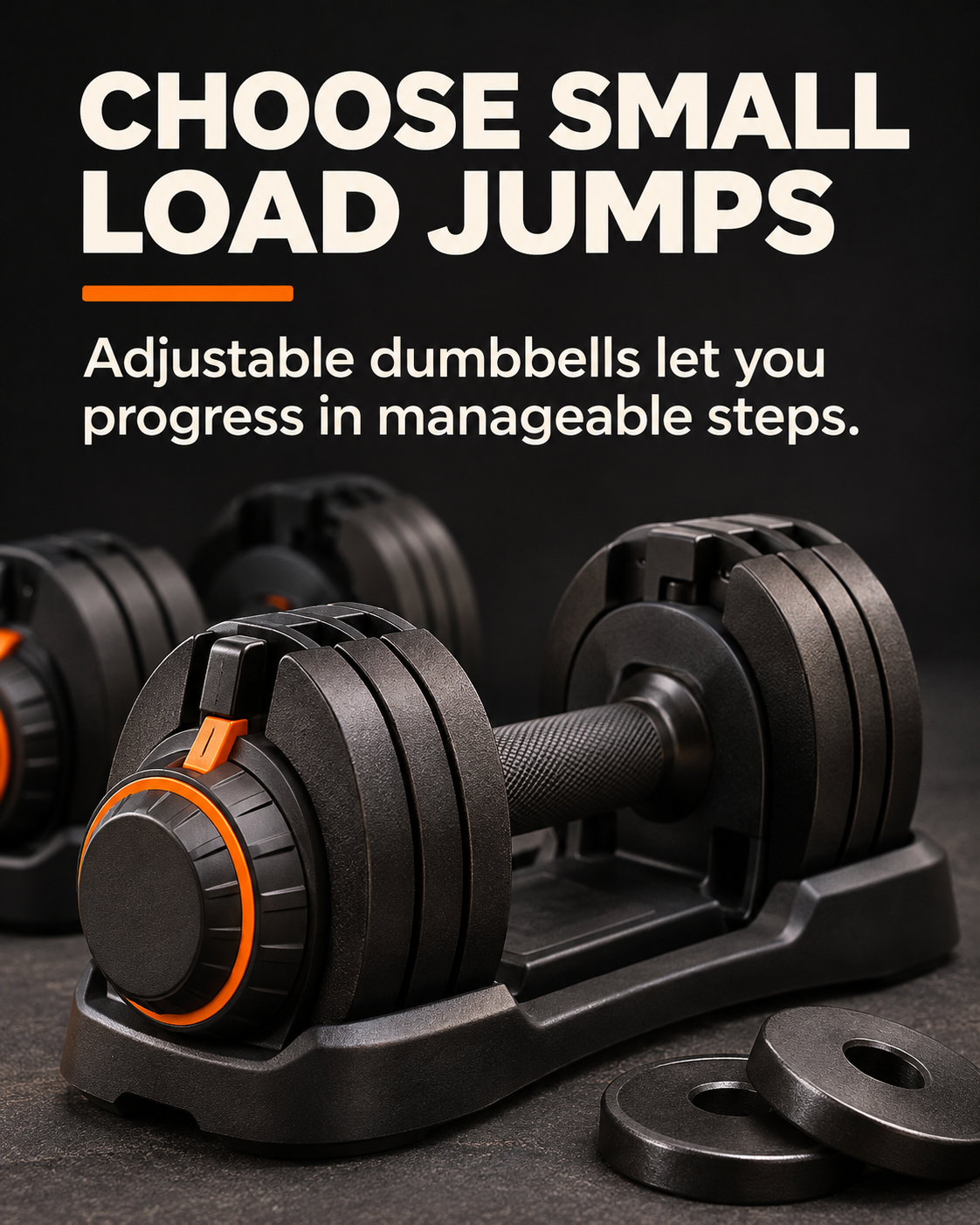
Choose small load jumps. Adjustable dumbbells let you progress inChoose small load jumps. Adjustable dumbbells let you progress in manageable steps.
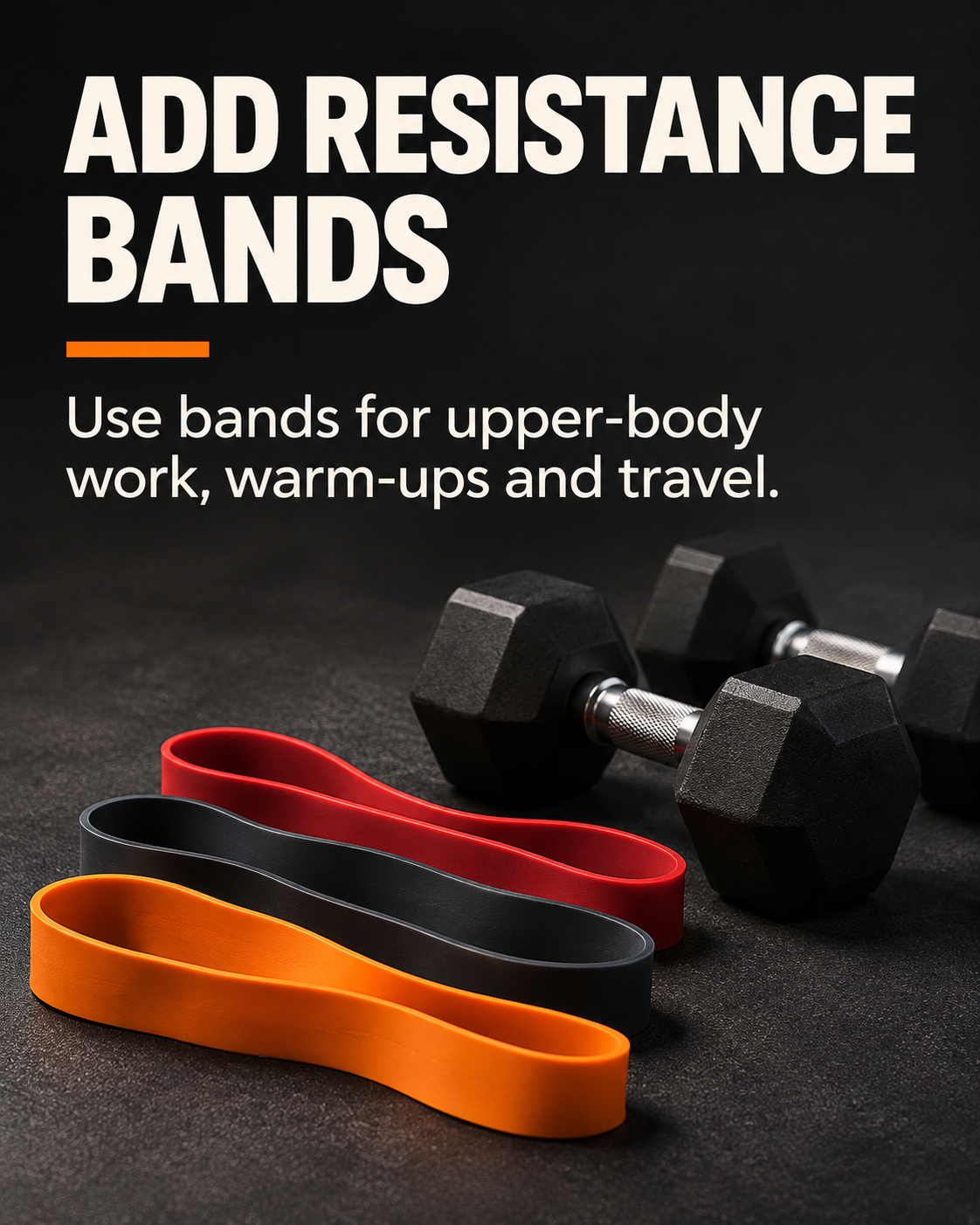
Add resistance bands. Use bands for upper-body work, warm-ups andAdd resistance bands. Use bands for upper-body work, warm-ups and travel.
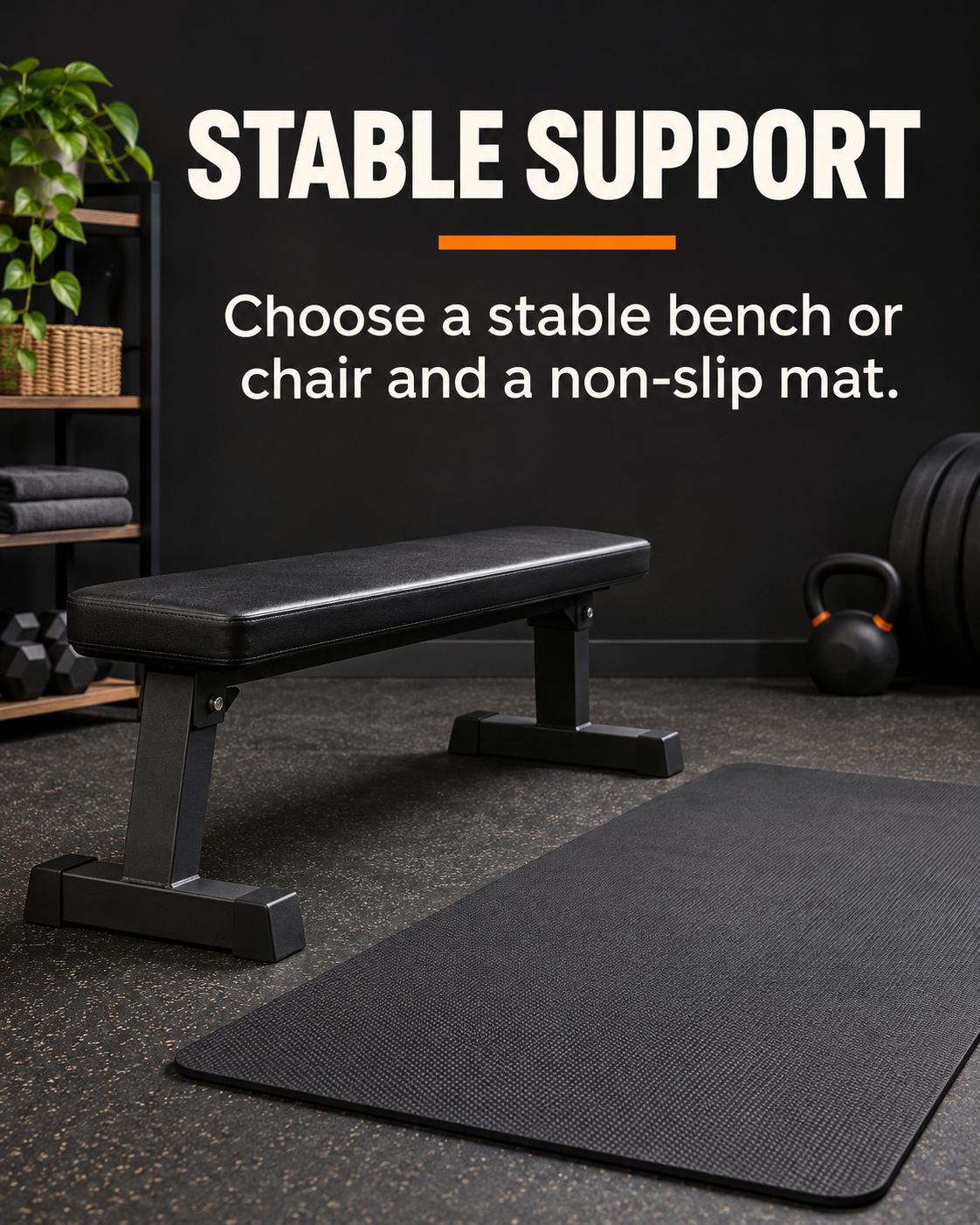
Stable support. Choose a stable bench or chair and a non-slip mat.
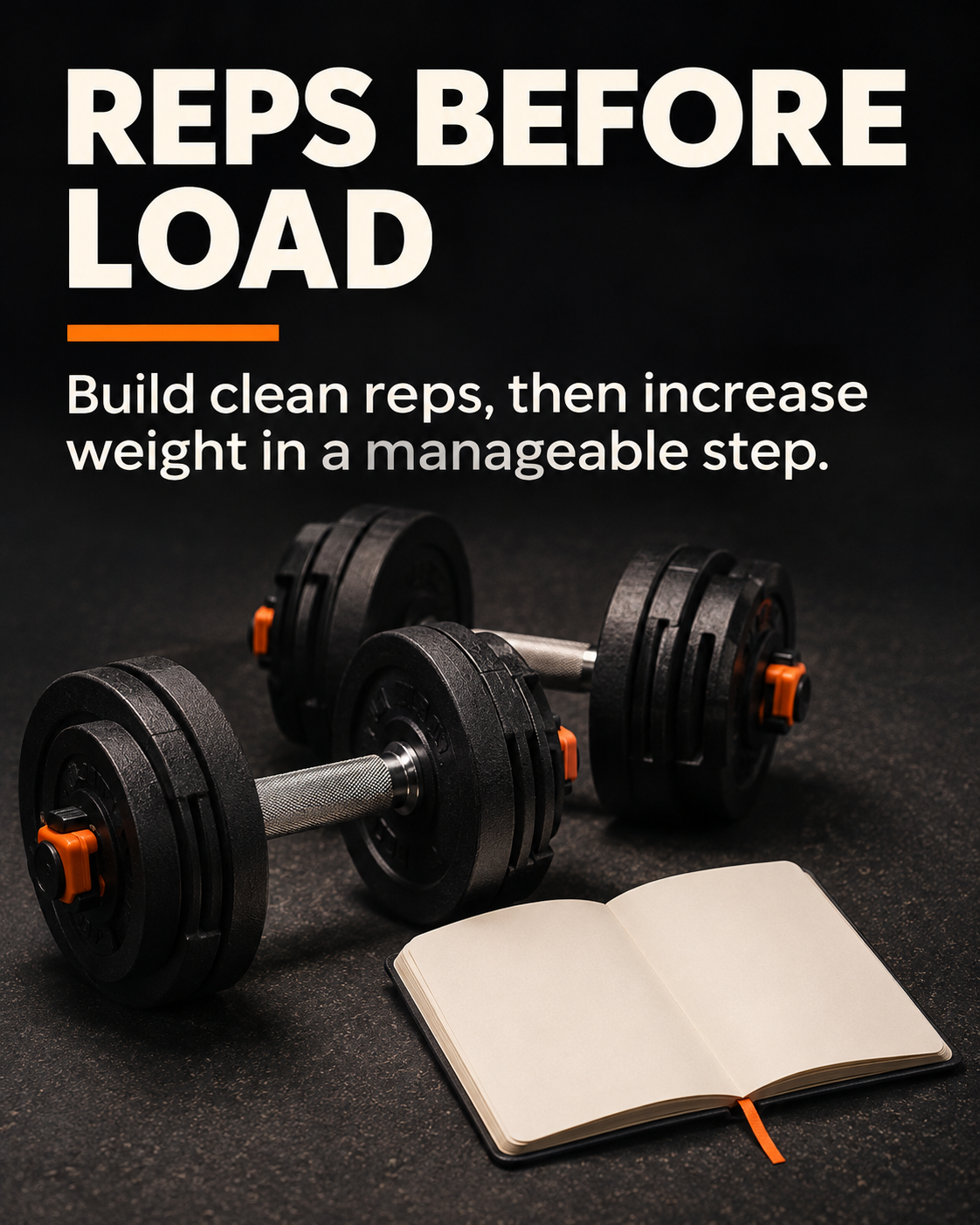
Reps before load. Build clean reps, then increase weight in aReps before load. Build clean reps, then increase weight in a manageable step.
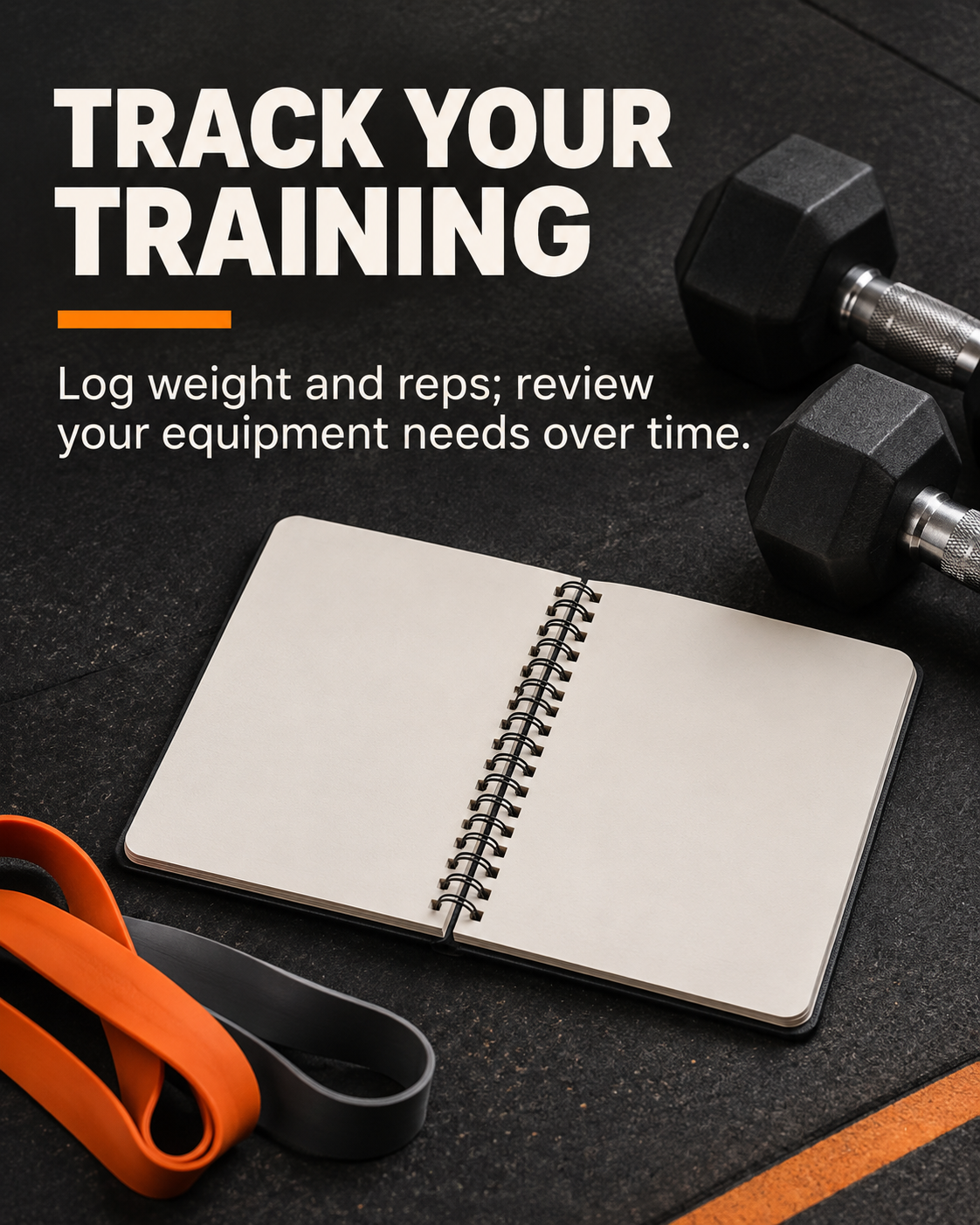
Track your training. Log weight and reps; review your equipment needsTrack your training. Log weight and reps; review your equipment needs over time.
Save photos and copy caption
Save the original photos in order, then add them and paste the caption in Instagram or Facebook.
The home gym equipment for beginners that actually covers 12 weeks is four pieces: a pair of adjustable dumbbells, a set of resistance bands, a sturdy bench or a chair that does the same job, and a mat. Buy for small load jumps, not for exercise variety. Everything else, racks, cable towers, machines, stays optional until your training log shows the current kit has stopped working.
The Four Pieces That Cover Most Beginner Training
Four pieces cover the first 12 weeks of beginner training: adjustable dumbbells, resistance bands, a bench or sturdy chair, and a mat. Each one solves a specific training problem. None of them is a machine, and that is the point. That is the whole home gym equipment checklist for the first block.
| Piece | Training problem it solves | What to look for |
|---|---|---|
| Adjustable dumbbells | Load jumps small enough to keep a press progressing | Increments around 2.5 kg (5.5 lb) per side, not 5 kg (11 lb) |
| Resistance bands | Upper back and shoulder volume, warm-ups, travel | Rated in kg or lb, not only light, medium, heavy |
| Bench or sturdy chair | Floor press, supported row, split squat elevation | No rock or wobble, flat surface, seat near 40 cm (16 in) |
| Mat | Floor work, core, hip thrusts, single-leg work | Dense enough not to slide, thick enough for knees |
Start with the dumbbells, because they decide whether the next 12 weeks work or stall. Buy a set that steps up in increments of roughly 2.5 kg (5.5 lb) per side. A fixed pair jumping 5 kg (11 lb) is fine for a goblet squat and useless for an overhead press, because the press runs through a long lever and small muscles, and that jump kills clean technique fast.
A beginner applying one progression lever every two weeks can usually stretch a single adjustable pair for 8 to 12 weeks before the load becomes the limiting factor. That timeline is why adjustables beat a rack of fixed pairs in a spare room.
Resistance bands come second, and not as a consolation prize. A meta-analysis of eight trials comparing elastic resistance with weight machines and dumbbells found no superiority for either method on upper limb strength (standardised mean difference -0.011) or lower limb strength (0.09). Bands hold their own against iron. For resistance bands for beginners, buy a rated set, not a three-pack of mystery elastic. Anchor it to a door frame or solid post, and use it for the upper back and shoulder work that dumbbells make awkward in a small room.
The bench is a safety purchase, not a comfort purchase. A dining chair works if it does not move. A chair that rocks turns a floor press into a balance drill and a supported row into a lower back experiment. Look for a flat bench with zero rock in it, or a solid chair with a seat around 40 cm (16 in) and a backrest you can brace against.
The mat is the piece that decides whether floor work happens at all. Knees, hips, core and single-leg work all end up on the floor. A dense mat that stays put is the difference between a session you start and a session you postpone.
What you don't need yet: a rack, a cable tower, a leg extension, a treadmill, a twelve-piece accessory kit, gloves and a lifting belt. Every one of those answers a problem you do not have in month one. Some of them never become necessary.
What Actually Matters: Load Jumps, Not Machine Count
Progression decides whether your beginner home gym setup works, not the equipment count. You need kit that lets you add load or reps in small steps, and a rep range with room to climb. Machines add convenience. They do not add progress on their own.
Work your sets in the 6 to 15 rep range. Lighter loads up to 15 to 40 reps are viable if you take the set to genuine effort, and a set that stops three reps short of hard does not count as training. Aim for at least 4 hard sets per muscle group per week, with 8 to 12 a sensible working range for most beginners. When weekly sets are matched, volume matters more than frequency, so three full-body sessions that spread the work beat one heroic leg day. If you want the session clock sorted, the 30-minute full-body session guide shows where the time goes.
Now the part nobody prints on a product page. A 2025 meta-analysis of 20 controlled trials with 1,397 adults with type 2 diabetes found gym-based resistance training lowered HbA1c by 0.39 percentage points while home-based training showed no significant effect. The authors did not blame living rooms. They pointed at limited equipment availability, imprecise load dosing, and the absence of a coach or training partner keeping adherence honest.
That is a design brief, not a warning about your garage. Your kit has to solve two problems: make load jumps small enough to dose accurately, and make progress visible enough that nobody has to chase you.
| Exercise | Sensible smallest jump | Why |
|---|---|---|
| Overhead press | 2.5 kg (5.5 lb) per side | Long lever, small muscles, a 5 kg jump wrecks form |
| Goblet squat | 5 kg (11 lb) total | Larger muscles tolerate bigger steps |
| Supported row | 2.5 to 5 kg (5.5 to 11 lb) | Depends on whether the chest is braced |
| Lateral raise | 1 to 2.5 kg (2 to 5.5 lb) | Smallest muscles in the kit, smallest jumps |
A press that needs 2.5 kg steps cannot be trained with a pair that only offers 5 kg jumps. A goblet squat that tolerates 5 kg steps can. Match the tool to the lift. If one pair has to do both jobs, buy the pair with the smaller increments and accept a slower climb on squats. For the full loading logic, read what dumbbell weight a beginner should start with.
The Trap: Buying Around Exercises Instead of Progression
Beginners buy around exercises instead of progression. They see a lat pulldown in a program, buy a cable tower, then discover there is no way to make that movement harder in six weeks without buying more plates. Three patterns show up on my floor constantly.
The five-kilo jump. Someone buys the fixed pair that looks serious, the press stalls in week five, and they add reps until they are grinding out twenty sloppy ones and calling it volume. The load never moved, so the stimulus never moved either.
The unrated band. Three bands with no resistance rating and no way to tell whether week eight is harder than week one. If you cannot quantify it, you cannot progress it.
The wobbling bench. Pressing on a chair that shifts under load, so the set ends when balance fails rather than when the chest does. That isn't a hard set. It's a negotiation.
The buying rule is the only one you need: every purchase answers one question. How does this let me add load or reps in six weeks? If you cannot answer that in one sentence, do not buy it.
There is a fourth progression lever when load cannot move: complexity. Increasing technical difficulty by going unilateral, unstable or through a longer range of motion raises the demand without adding weight. Use it as the backup, not the plan. Load, reps and sets come first for a beginner.
One honest caveat. A gym membership earns its fee when you need heavy lower-body loading or machine hard sets without a spotter. If your dumbbells cap your squat at a weight that no longer challenges you, either buy the next pair or run legs at a gym and keep the home kit for upper body work and extra frequency. That comparison is covered in gym versus home training for beginners.
How to integrate
Run the kit on a 12-week plan before you buy anything else. This is the sequence I use.
| Weeks | Focus | What changes | Purchase decision |
|---|---|---|---|
| 1 to 2 | Movement practice | Bodyweight and light dumbbells, 2 sets of 8 to 12 per exercise | Buy nothing |
| 3 to 6 | Add volume | Add one set per exercise, push reps to the top of the range | Buy nothing |
| 7 to 10 | Add load | Move up one increment when top reps stay clean | Check the log first |
| 11 to 12 | Reassess | Test whether the next increment is available and usable | Heavier dumbbells, or nothing |
The weekly template: three full-body sessions, five or six exercises each, compound work first. Spread 8 to 10 weekly sets per major muscle group across those three days. Goblet squat, floor press or press-up, row, hinge, then one band or dumbbell accessory for shoulders or arms. If you want the sessions written out, use the 3-day beginner dumbbell plan.
The log rule: two numbers per set, load and reps. Nothing else. No app subscription, no wearable, no mood tracking. A notebook on the floor does the job. If the numbers are not written down, the progression rule does not exist and you are training by feel, which is how week eight ends up identical to week one.
That log also tells you when the next purchase is justified. Two sessions at the top of the rep range with clean form and a load that has not moved in three weeks means the kit has stopped working, not that you have. Read how many sets per muscle per week and progressive overload before you spend more money on equipment.
This week: buy the dumbbells and the bands, run session one, and write down every set. Add the bench and mat before the second week, not after the first stalled month.
What you need to keep in mind
A home gym starter kit is not a program. Four pieces chosen for small load jumps, used with a written progression rule, will carry a beginner for 12 weeks and often longer. Do not buy a fifth thing until the fourth one has stopped working.
Two numbers govern everything else: hard sets per muscle per week and the size of your smallest load jump. Get those right and the equipment list takes care of itself.
Accountability is the one piece you cannot buy. A 2025 mixed-methods study of older adults with obesity who moved from supervised gym training to unsupervised home training reported the same complaints: limited equipment, no supervision, and a routine that dissolved without anyone checking. Fix it with a written log and a fixed training time. Nobody needs to chase you if the notebook does.
If you are returning from injury, managing a diagnosed condition, or pregnant, get a clinician's sign-off before you start loading. The training principles hold. The starting loads and the exercise selection may not.
If you want to understand the volume floor and how little work actually moves the needle, read minimum effective dose strength training and how to build muscle.
FAQ
Do I need a bench for a beginner home gym?
No, but you need something stable that does the same job. A floor press, a chest-supported row over a solid chair, and a split squat with the rear foot elevated cover the bench's main uses. Buy the bench when the floor limits your range of motion or when the chair wobbles under load.
Are adjustable dumbbells worth it for beginners?
Yes, if the increments are small. A set that moves in 2.5 kg (5.5 lb) steps per side solves the progression problem for 8 to 12 weeks. A set that jumps 5 kg (11 lb) will stall your press early and force a second purchase.
Can I build muscle with resistance bands only?
You can build meaningful strength. Elastic resistance matched conventional machines and dumbbells for upper and lower limb strength across eight trials. The limitation is loading the lower body heavy enough long term. Bands are excellent for the upper body and fine as a starting point.
What should I buy first for a home gym?
Adjustable dumbbells, then bands. Those two cover every major muscle group for the first month. Add a stable bench or chair and a mat before week two. Skip racks, towers and machines until your log demands them.
How heavy should beginner dumbbells be?
Heavy enough that 8 to 12 controlled reps are hard, light enough that you can press and row with clean technique. Most beginners land somewhere between 5 kg and 12.5 kg (11 lb and 28 lb) per dumbbell on upper body work, and higher on squats and hinges.
How do I know when to buy more equipment?
When the log shows the same load for three weeks at the top of the rep range with clean form. That is the kit failing, not you. Buy the next increment, not a new machine.
Sources Used
- Effects of home- and gym-based resistance training on glycemic control in patients with type 2 diabetes mellitus: a systematic review and meta-analysis
- No Time to Lift? Designing Time-Efficient Training Programs for Strength and Hypertrophy: A Narrative Review
- Effects of training with elastic resistance versus conventional resistance on muscular strength: A systematic review and meta-analysis
- Minimalist Training: Is Lower Dosage or Intensity Resistance Training Effective to Improve Physical Fitness? A Narrative Review
- Three Types of Exercise Can Improve Your Health and Physical Ability (National Institute on Aging)
- Complexity: A Novel Load Progression Strategy in Strength Training
- Experiences and outcomes of older adults with obesity transitioning from gym- to home-based resistance training due to COVID-19 lockdowns