How to Choose a Beginner Strength Program for a Client
Choose the Right Beginner Program. Match the plan to the client’sChoose the Right Beginner Program. Match the plan to the client’s schedule, equipment and recovery.
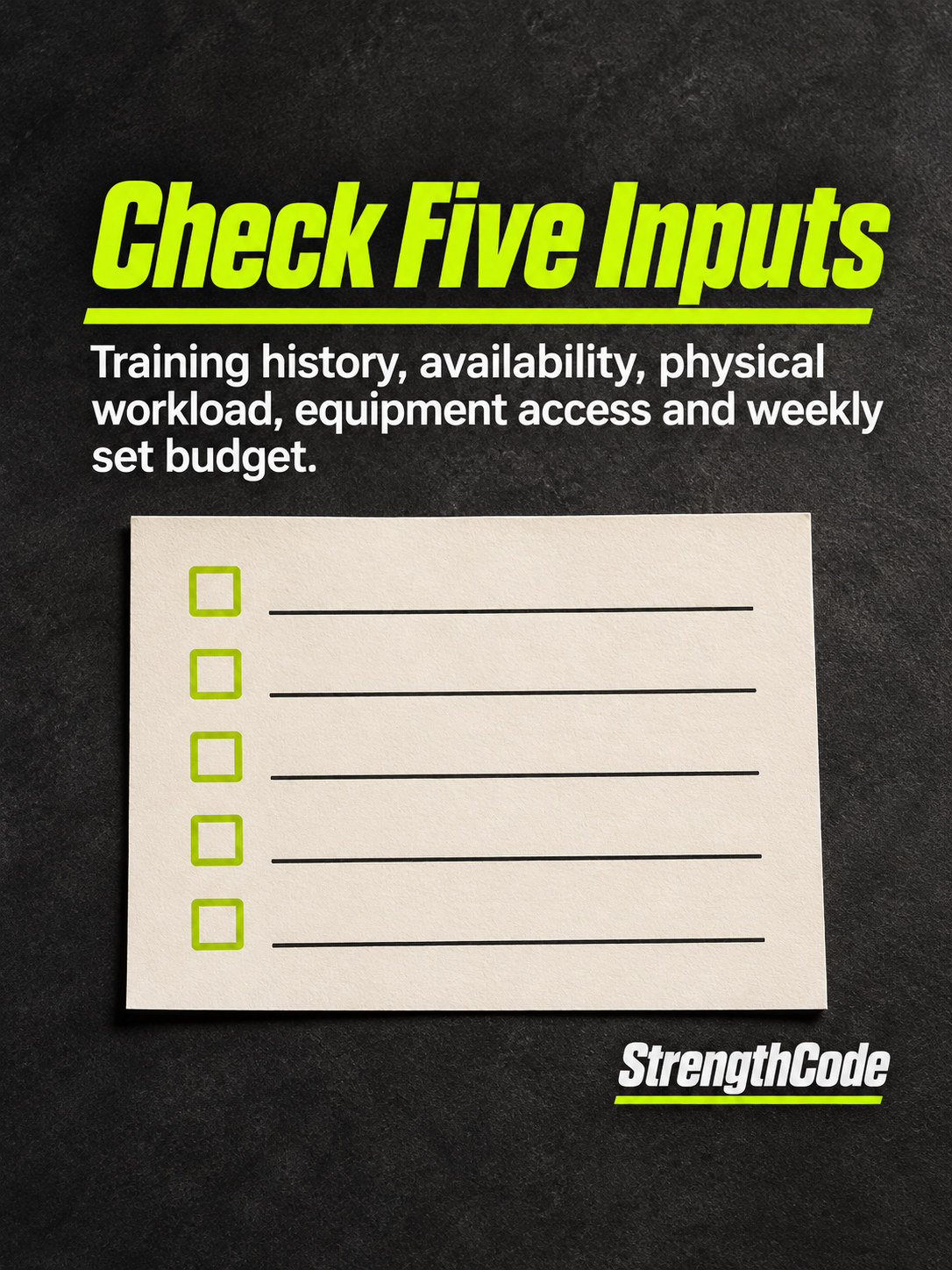
Check Five Inputs. Training history, availability, physical workload,Check Five Inputs. Training history, availability, physical workload, equipment access and weekly set budget.
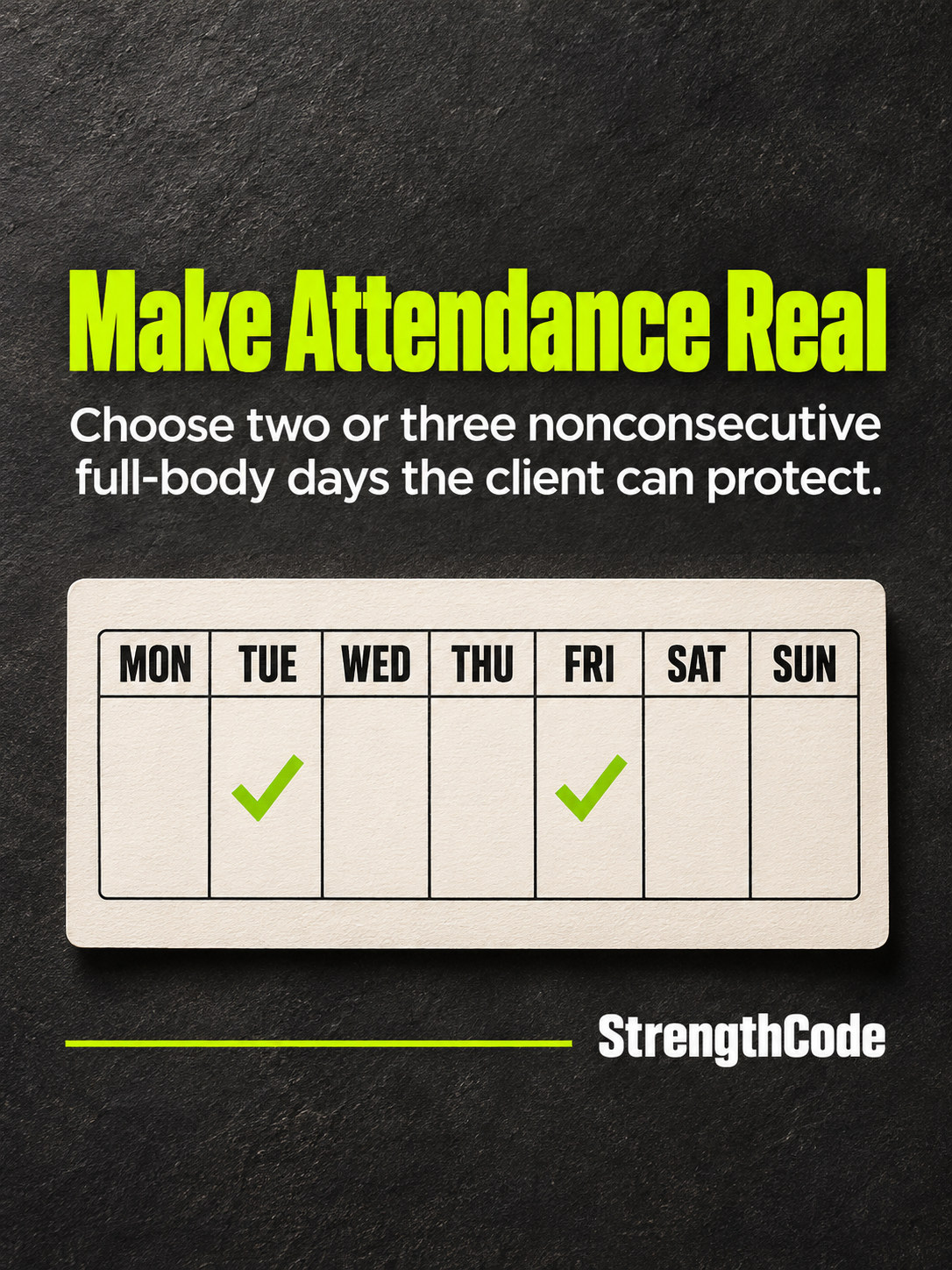
Make Attendance Real. Choose two or three nonconsecutive full-body daysMake Attendance Real. Choose two or three nonconsecutive full-body days the client can protect.
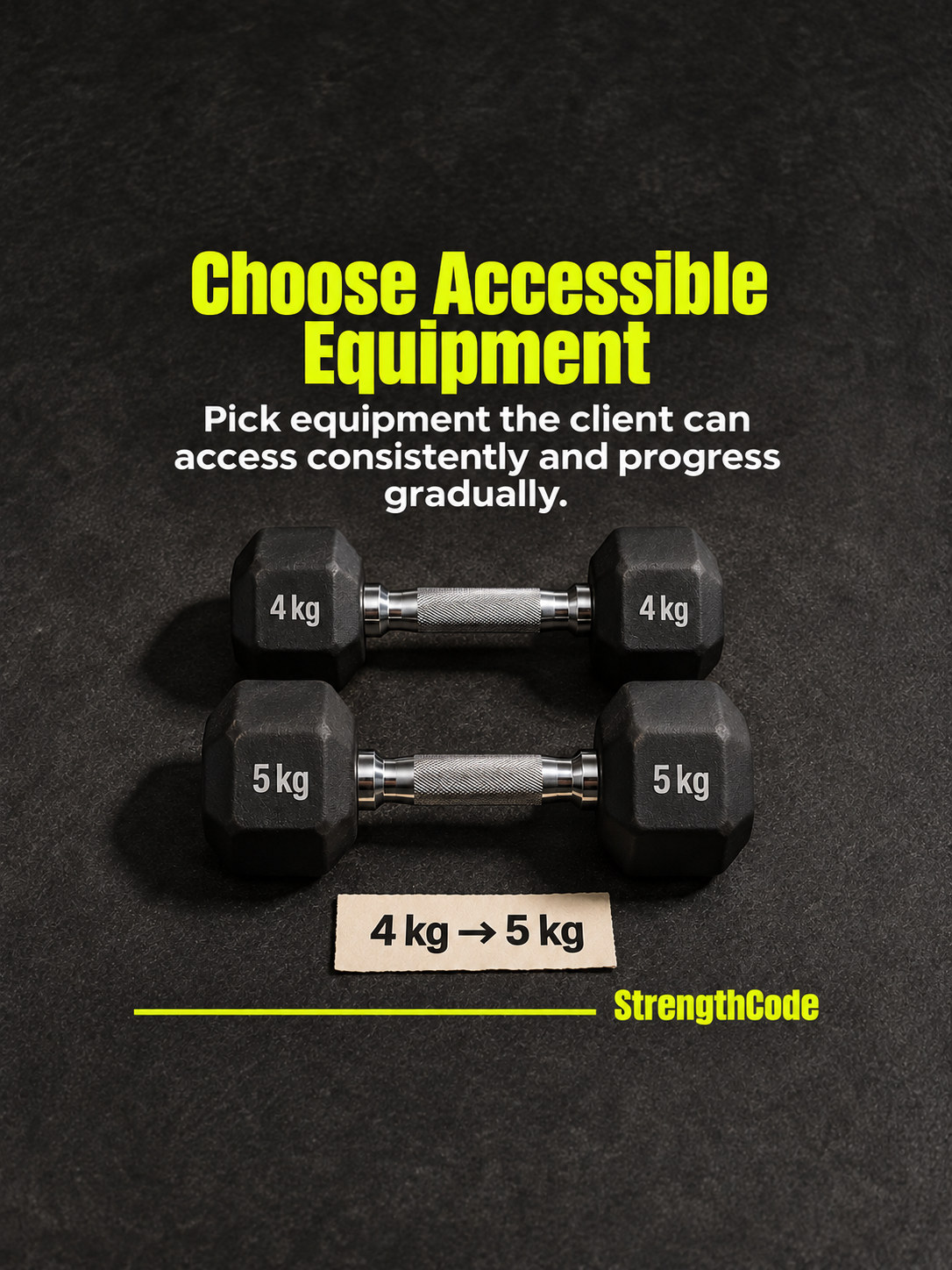
Choose Accessible Equipment. Pick equipment the client can accessChoose Accessible Equipment. Pick equipment the client can access consistently and progress gradually.
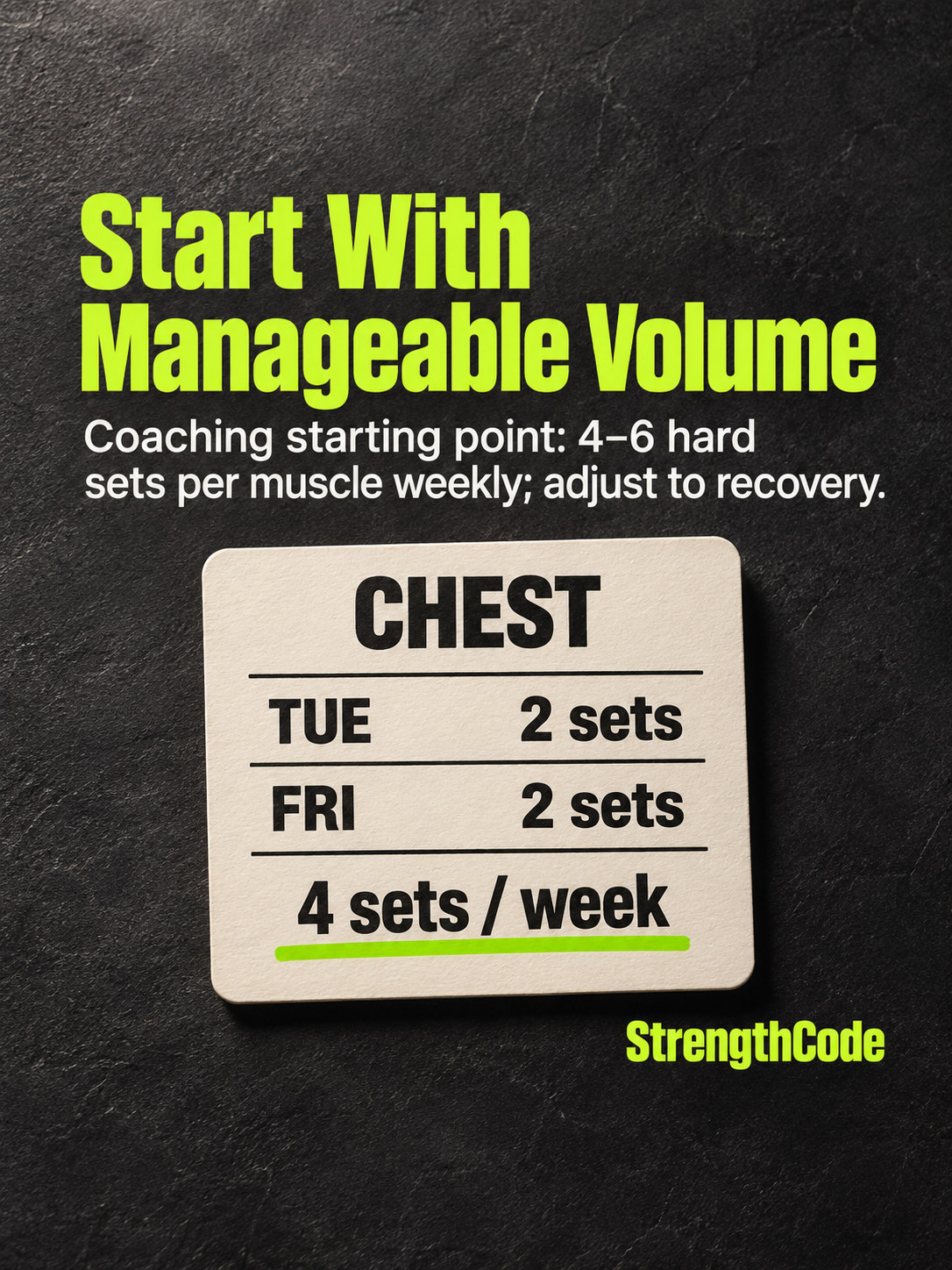
Start With Manageable Volume. Coaching starting point: 4–6 hard setsStart With Manageable Volume. Coaching starting point: 4–6 hard sets per muscle weekly; adjust to recovery.
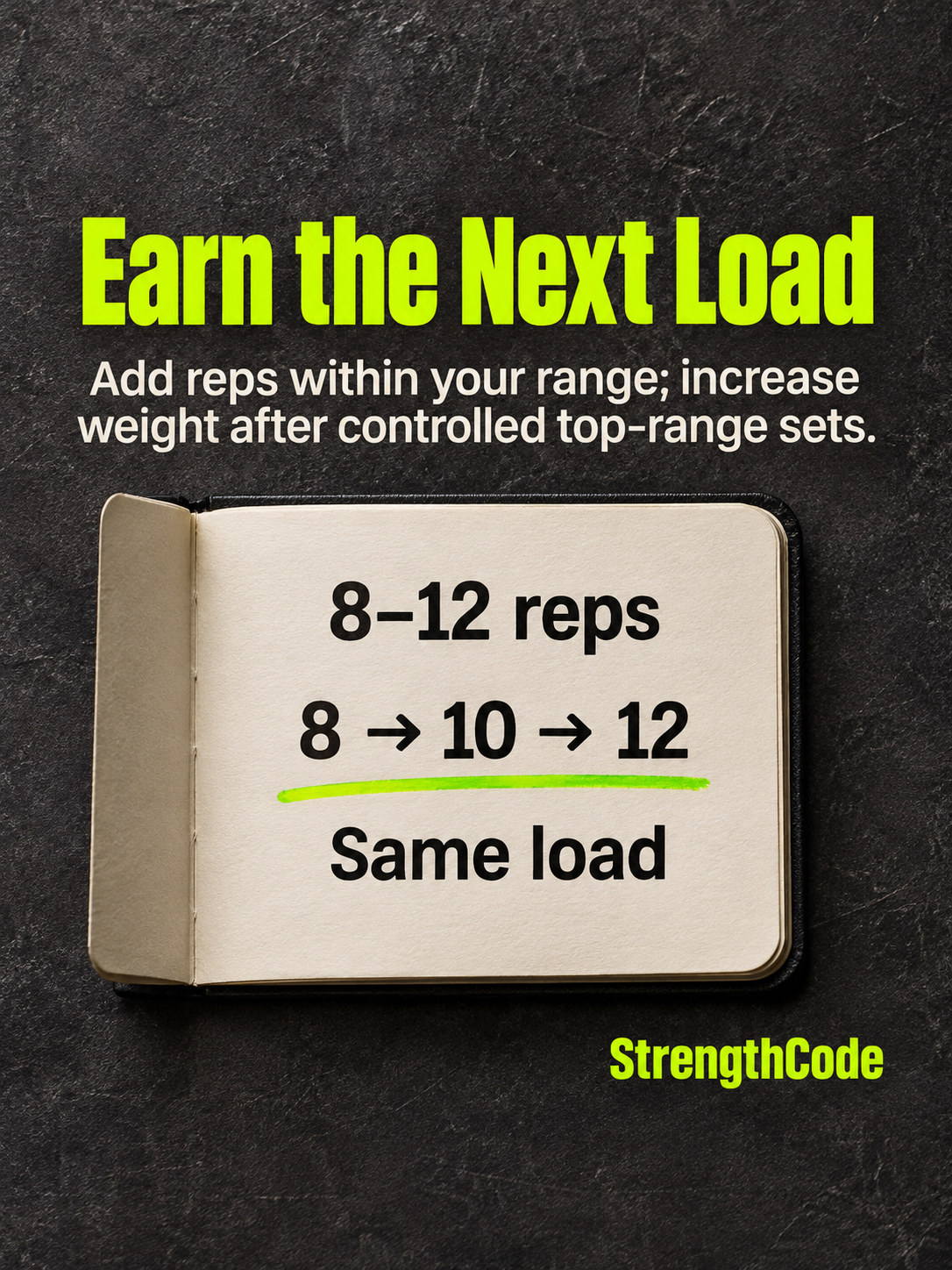
Earn the Next Load. Add reps within your range; increase weight afterEarn the Next Load. Add reps within your range; increase weight after controlled top-range sets.
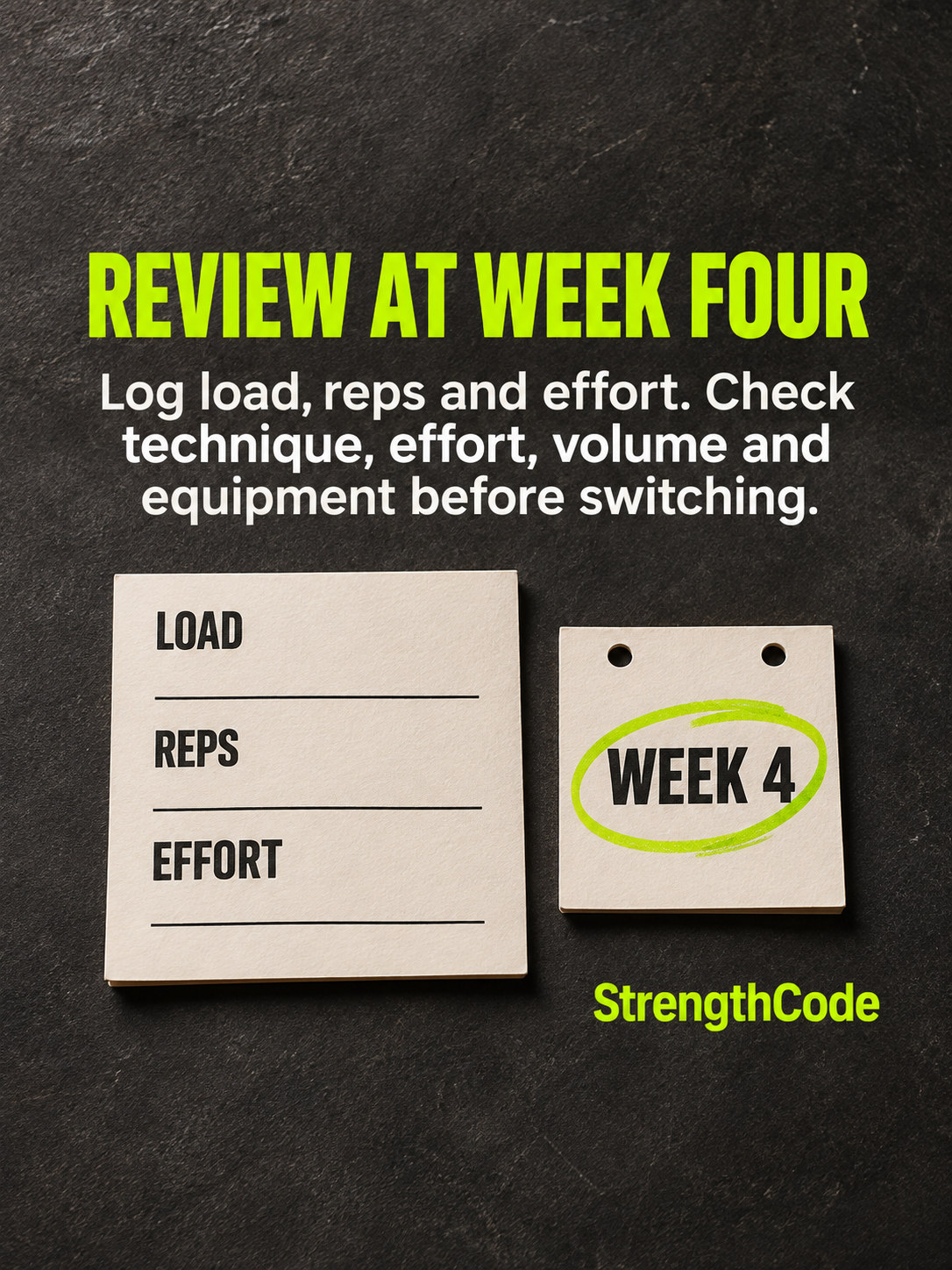
Review at Week Four. Log load, reps and effort. Check technique,Review at Week Four. Log load, reps and effort. Check technique, effort, volume and equipment before switching.
Save photos and copy caption
Save the original photos in order, then add them and paste the caption in Instagram or Facebook.
How to Choose a Beginner Strength Program for a Client: A Coach's Intake and Selection Framework
Which beginner strength program you pick for a client depends on five intake inputs: training status, weekly availability, total physical load outside the gym, the equipment and setting the client can actually get to, and a weekly set budget. Most novices land on two or three nonconsecutive full-body days of 30 to 45 minutes, 4 to 12 hard sets per muscle per week, one progression rule, and a review date at week four. The plan matters less than the match.
A new client slides a phone across your desk. Six downloaded plans, four screenshots, a PDF from a forum, and a question: which one?
You do not need a seventh plan. You need a decision path that ends with one program, one progression rule and one review date written on paper. The shortage on the coaching floor isn't programs. It's selection discipline, and it's the part that separates the coach who gets results from the one handing the same twelve-week template to a shift worker, a construction labourer and a client training at home with two bands.
The skill of how to choose a beginner strength program for clients isn't plan collecting. It's constraint matching. Collect five inputs in a fifteen-minute conversation and the plan nearly picks itself.
Inputs 1 to 3: training status, equipment and setting, and the weekly set budget
Frequency is set by training status and total physical load, not by enthusiasm. Two or three nonconsecutive full-body days suit most beginners, with one to three days between sessions that stress the same muscles, and that number falls when the client's job or another sport already carries real load. The other two inputs decide the shape of the session once frequency is fixed.
Input 1: training status and total physical load decide frequency first
Beginners recover slower than trained clients, so they get fewer sessions, not more. The NSCA guidance is blunt: lesser-trained clients usually need more rest between workouts, and frequency drops when overall physical or psychological stress is high from work, study or other exercise [1].
Keep the conditions attached to the number, because this is where coaches get quoted out of context. Two or three nonconsecutive days per week for a full-body program, one to three days between sessions hitting the same muscles, never more than three. A Monday and Wednesday schedule fails that rule, because the gap back to Monday is five days.
Now apply the load test. A construction worker doing repetitive lifting all day may not tolerate more than two or three resistance sessions on top of it [1]. A client already running 30 minutes, five days a week, may only hold two lifting days [1]. Same program on paper, different training frequency for novice clients in practice.
You ask three questions before you open a program:
- What does your work day physically cost you?
- What else are you training or playing right now?
- Which two or three days will you actually show up?
If the client cannot name the days, the frequency isn't real yet.
Input 2: equipment and setting are adherence variables, not ideology
Pick the setting the client will attend and the kit that lets them load hard sets. Across 13 studies and 1,016 participants, free weights and machines produced comparable hypertrophy and comparable neutral strength, while strength gains stayed specific to the modality tested [8]. That makes the barbell versus machine argument an argument about access and preference, not about muscle. If your client has a tested lift they care about, train that lift the way it gets tested.
Adherence is the second half. In a one-year follow-up of 250 novice gym members, enjoyment, self-efficacy for sticking to a plan and social support predicted regular attendance, and most new members never reached it [9]. Read that correctly. It isn't a promise that any individual client will adhere. It's a reason to choose the room and the kit the client will keep using after week three, even when the plan on paper is less elegant.
Home versus gym training for beginner clients comes down to two practical questions. Can the client get to the gym without burning two hours a week in a commute? Can their home kit produce small enough load jumps to keep progressing? A four-piece home setup of adjustable dumbbells, bands, a bench or sturdy chair and a mat covers at least twelve weeks for most beginners, which is what the 4-piece home kit built for 12 weeks is designed around. If the client's home dumbbells jump from 10 kg to 15 kg (22 lb to 33 lb) on pressing work, expect a stall that has nothing to do with effort.
Input 3: weekly set budget and session length set the template
A hard set is a working set taken close enough to failure that it counts toward weekly volume. A weekly set budget is the total number of hard sets per muscle across the week. Those two definitions do most of the programming work.
The floor supported by research is lower than most coaches assume. A review of time-efficient strength training supports meaningful gains from a minimum of about four weekly hard sets per muscle group in a 6 to 15 rep range [2]. That's a floor, not a target.
The 8 to 12 hard sets per muscle per week band is a coaching starting point, not a proven optimum. It sits above the floor, it fits 30 to 45 minute sessions, and it leaves room to add work when the log justifies it. Treat it as a working band and say so out loud.
Session structure follows from that budget. Three to five compound lifts, 30 to 45 minutes of actual training, and accessory work only where it earns its place. If the client cannot finish inside the window, cut exercises, not effort. The 30-minute full-body session structure shows how much work actually fits on the clock.
Exercise selection has its own evidence: a Delphi consensus of strength and conditioning experts rated 41 exercises as technically appropriate for novices, with 32 more suitable for beginners over 60 [3]. The ACSM-CPT task list puts screening, exercise history, available resources and FITT decisions in the consultation and programming domains, which is where this decision belongs [5][6].
The selector: client constraint mapped to plan, weekly structure and first progression rule
Read the constraint, then take the plan it points to. The table turns the first three inputs into a decision, and it names the first progression rule so the client leaves session one knowing what progress looks like.
| Client constraint | Plan and setting | Weekly structure | First progression rule |
|---|---|---|---|
| Only two days available, shift work | Full-body, gym or home | 2 nonconsecutive days, 4 to 5 compound lifts, 30 to 45 min | Add reps within 8 to 12, then add load |
| Job is physically heavy or client already runs 5 days a week | Full-body, reduced frequency | 2 days, 1 to 3 days between sessions hitting the same muscles [1] | Reps first, load only when recovery holds |
| Home with bands and one pair of dumbbells | Bands plus dumbbell hybrid | 3 nonconsecutive days | Add band tension or reps, then load |
| Gym access with machines and a short commute | Machine-led full-body | 3 nonconsecutive days | Add load in the smallest available increment |
| Wants a specific tested lift to go up | Free-weight version of that lift | 3 days, tested lift first in the session | Load progression on the tested lift [8] |
| Dumbbell jumps too large to load smoothly | Home dumbbell plan, rep-led | 3 nonconsecutive days | Double progression to the top of the range, then jump |
Two rows deserve a named plan rather than a template description. A client training at home with a band set and a door anchor fits the 3-day beginner resistance band plan, and a client with adjustable dumbbells and a bench fits the 3-day beginner dumbbell program. Both run three full-body days with compound work first, which is what the frequency guidance calls for.
Double progression means you add reps inside a range, then add load once the top of the range is hit with clean form. It's the default for beginners because it solves the most common equipment problem: load jumps that are too big.
The evidence supports both routes. In an eight-week trial, increasing load with reps held constant and increasing reps with load held constant produced similar hypertrophy and similar practical strength outcomes [7]. Rep progression isn't the consolation prize. It's a valid overload strategy, and often the only one available on a home dumbbell set.
The gate before load is technique. A rep you cannot control on the way down, in the range you intended, looking like the movement you meant to train, does not earn more weight. Read the full case in technique before load before you hand a client their next increment.
For starting weight, the number on the dumbbell isn't a difficulty rating. Leverage decides. A 7.5 kg (17 lb) lateral raise can be harder than a 20 kg (44 lb) goblet squat. The beginner dumbbell weight and progression guide walks through picking a first load per movement pattern.
Monitoring and the week 4 review: what to log and what counts as a non-response
A stalled client is one whose logged reps or load have not moved for several weeks while sleep, protein and effort are in place. That definition stops you from switching programs to fix a problem that lives somewhere else.
Log three things per session: load, reps per set, and a one-line effort note. Nothing else earns its place in a beginner's notebook. That gives you a week four conversation built on data instead of memory.
A training plan is a mix of interacting decisions, and only some of them can rest on research. That's why the honest term is evidence-informed: part of the plan comes from the literature, part from the client's constraints, part from what the log says after four weeks [4]. Adaptation to the same program varies widely between people, so the review isn't optional administration. It's the mechanism [4].
Run the fix order before you touch the program:
- Technique. Are the reps actually the exercise?
- Effort. Are those sets genuinely hard, or three reps shy of it?
- Volume. Is the weekly set budget at the floor when the client could handle more?
- Equipment or setting. Is the kit or the room the limiting factor?
- Plan. Only now do you switch programs.
The equipment question resolves itself with a simple rule. When the log shows the same setup at the top of the rep range for three straight weeks with clean form, and tempo, stance or anchor height have already been used, the kit has stopped working. Buy the next increment, not a new machine. Bands at the ceiling of their tension are the same story in a different material.
Progressive overload is a principle, not a weekly obligation. The client who progresses longest wins, and some weeks the win is a cleaner rep at the same load. For the wider logic, read progressive overload in practice and minimum effective dose strength training.
How to integrate
Run this as a fifteen-minute intake, then write it on one page.
The script. Five questions, in this order: What does your week physically cost you? Which two or three days can you protect? What kit and setting do you actually have access to? What does your training history look like, including anything in the last two years? What result would make this worth your time in twelve weeks?
The one-page card. Client name, chosen plan, training days, session length, weekly set budget per muscle, the one progression rule, starting loads per lift, the week four review date, and the single reason this plan was chosen over the alternatives. If you cannot write that last line, you haven't made a decision yet.
The booking. Put the week four review in the calendar before the first session happens. Not after. A review date that lives in your head is a review that doesn't happen.
Then check the log at week four against the card and adjust in the fix order above.
What you need to keep in mind
Five inputs, one plan, one progression rule, one review date. That's the framework, and it beats a better-looking template every time.
A coach who can say out loud why this client got this plan, and what would make them change it, is already ahead of the coach handing the same twelve-week document to everybody who walks in. Specificity of decision is the skill. The program is just the output.
Do one thing this week: run the fifteen-minute intake on your next new client, write the card, book week four, and hold yourself to the reason you wrote down.
FAQ
What if my client can only train two days a week?
Two nonconsecutive full-body days works for beginners. Spread 4 to 8 hard sets per muscle across those sessions, keep sessions at 30 to 45 minutes, and hold the progression rule steady. More days would help volume, not adherence.
Should a beginner client use resistance bands or dumbbells?
Either, if the sets are hard and the progression is written down. Bands work when tension is rated and progressed. Dumbbells work when the jumps are small enough. A client at home with a band set and a door anchor fits the 3-day band plan; a client with adjustable dumbbells and a bench fits the 3-day dumbbell plan.
Should I start a novice on machines or free weights?
Either, based on access and preference. Hypertrophy and neutral strength outcomes are comparable between modalities, and strength gains are specific to what gets tested [8]. If the client will attend a gym with machines three times a week, machines win on attendance alone.
How many hard sets per muscle should a beginner do in week one?
Start around 4 to 6 hard sets per muscle per week, near the research-supported floor. Build toward 8 to 12 over several weeks as recovery and technique allow. The 8 to 12 band is a practical working range, not a proven optimum.
My client's job is physically heavy. Do I cut frequency or volume first?
Cut frequency first. Heavy work and other training reduce tolerable lifting days, and two sessions may be the honest ceiling. Trim sets per session second if the client is still accumulating fatigue.
How do I know the plan is failing rather than the client needing more time?
Check the log. If reps or load have not moved for several weeks while sleep, protein and effort are in place, the plan is failing. If any of those three are missing, fix them before you change a single exercise.
What should be on the one-page client card?
Chosen plan, training days, session length, weekly set budget, one progression rule, starting loads, week four review date, and the reason this plan was selected. That card is the core of beginner client intake for personal trainers who want decisions they can defend later.
Sources Used
- Determination of Resistance Training Frequency, NSCA
- No Time to Lift? Designing Time-Efficient Training Programs for Strength and Hypertrophy: A Narrative Review
- Selecting Resistance Training Exercises for Novices: A Delphi Study with Expert Consensus
- Personalized, Evidence-Informed Training Plans and Exercise Prescriptions for Performance, Fitness and Health
- ACSM-CPT Crosswalk
- ACSM Certified Personal Trainer Exam Content Outline
- Progressive overload without progressing load? The effects of load or repetition progression on muscular adaptations
- Effect of free-weight vs. machine-based strength training on maximal strength, hypertrophy and jump performance: a systematic review and meta-analysis
- What Makes Individuals Stick to Their Exercise Regime? A One-Year Follow-Up Study Among Novice Exercisers in a Fitness Club Setting