Creatine for Beginners: Benefits, Dosage, Timing, and Common Mistakes
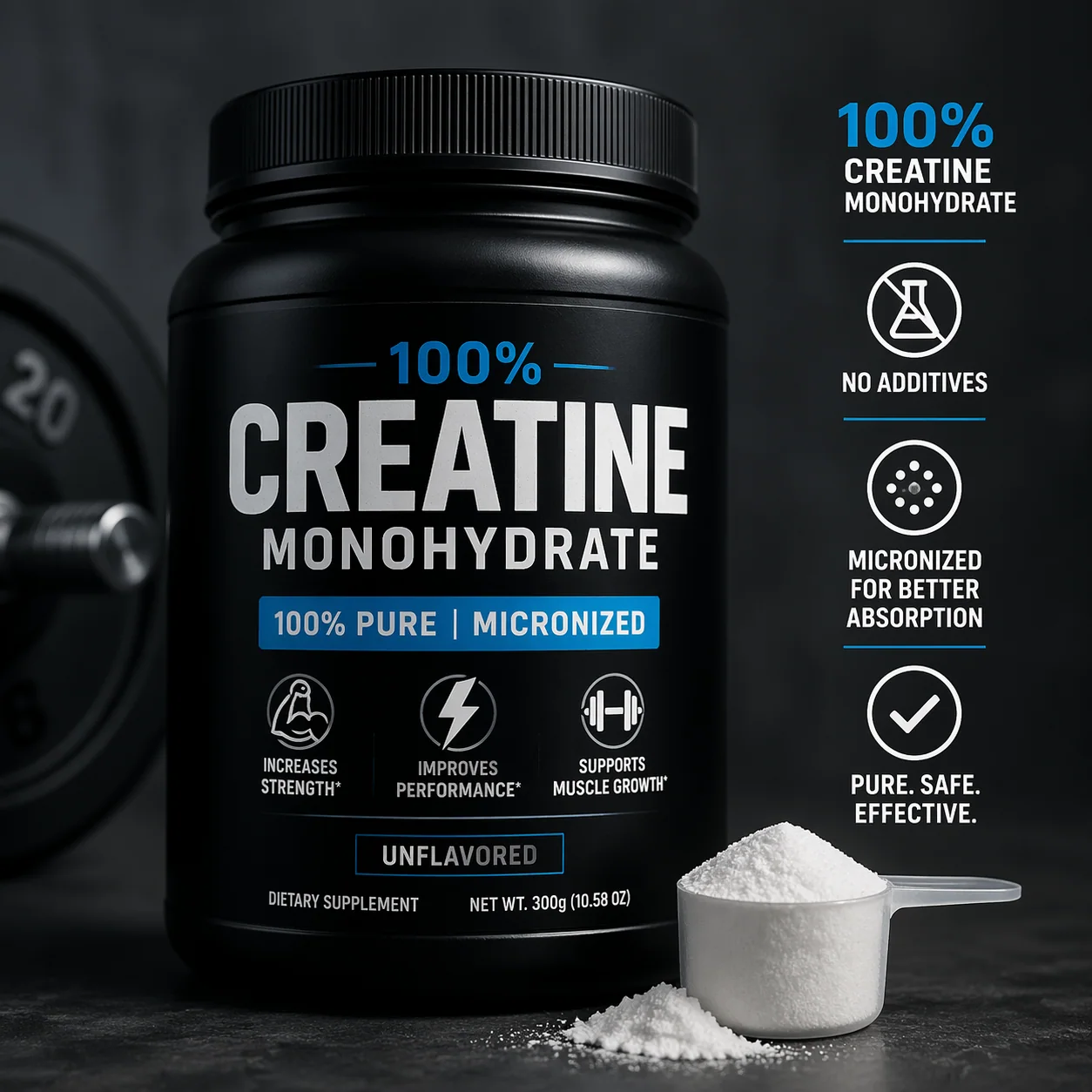
Creatine is one of the few supplements in fitness that has earned its reputation. It is simple, proven, affordable, and effective when used correctly. Yet most beginners still get it wrong. They overcomplicate timing, chase fancy versions, or quit before the supplement has had time to do its job.
This guide breaks down what creatine is, why it matters, how to use it in real training, and the mistakes that kill results. The goal is not just to explain creatine. The goal is to help you use it properly and make it part of a training system that drives strength, muscle, and performance.
What Creatine Is and Why It Matters
Creatine is a compound stored mostly in your muscles. Your body makes some of it naturally, and you also get small amounts from foods like red meat and fish. Supplementing with creatine helps increase your muscle creatine stores, which supports the rapid energy system your body uses during hard, explosive efforts.
That matters in real training.
If you lift weights, sprint, jump, or perform repeated high-intensity efforts, creatine can help you train at a higher level. More output in training usually means more quality reps, better performance, and stronger progress over time.
For beginners, this is important because early progress is driven by consistency and quality. Creatine is not magic, but it can support both. It helps you maintain power during demanding sets, recover better between repeated efforts, and push training volume harder when your program is structured well.
The biggest benefit is not that creatine “builds muscle” directly in isolation. The real value is that it improves the training environment. Better energy availability during hard efforts can support stronger sessions. Stronger sessions create more useful tension, more productive volume, and more opportunities for progress.
This is why creatine works best for:
- strength training
- hypertrophy training
- sprint work
- field and court sports
- repeated explosive efforts
If someone trains hard and wants more out of that training, creatine makes sense.
It also matters because it is one of the most researched sports supplements available. That separates it from the endless list of weak, trendy products in the supplement market. For a beginner, that matters. You do not need ten supplements. You need a few basics that actually move performance. Creatine is one of them.
Benefits, Dosage, and Timing
The first rule with creatine is this: keep it simple.
The best form for most people is creatine monohydrate. It is the standard. It is the version with the strongest research base. It is effective, affordable, and does not need marketing hype to justify itself. Most beginners should not waste time comparing exotic forms that promise better absorption or fewer side effects. Start with monohydrate and stay there unless there is a real reason to change.
The standard daily dose for beginners is 3 to 5 grams per day.
That is enough for most people to maintain elevated muscle creatine stores over time. Some people use a loading phase, usually around 20 grams per day split into smaller doses for about 5 to 7 days, followed by a maintenance dose. Loading can help saturate stores faster, but it is not required. A beginner can simply take 3 to 5 grams per day and still get the benefit. It just takes a bit longer to fully build up.
Timing is the part people obsess over too much.
Yes, there are endless debates about whether creatine is better pre-workout or post-workout. In practice, consistency matters far more than the clock. The best time to take creatine is the time you will actually remember to take it every day. With breakfast, after training, or with your evening meal all work. Missing doses because you are trying to be perfect is worse than taking it daily at a non-optimal time.
You should also take creatine on rest days. This is not a pre-workout stimulant. It is not something you use only when you feel like training hard. It works by saturating muscle stores over time. Daily intake is what matters.
Hydration also matters, but this is often explained poorly. Creatine pulls more water into muscle tissue, which is part of why some people notice a small increase in scale weight early on. That does not mean it is causing bad weight gain. It means muscle water content is shifting. For a lifter trying to improve performance, that is not a problem. It is part of the process. Drink enough water consistently and stop treating normal fluid shifts like a red flag.
Common Mistakes Beginners Make
The first major mistake is inconsistency.
A beginner buys creatine, uses it for four days, forgets it for a week, takes it again before one workout, and then decides it does not work. That is not a creatine problem. That is a compliance problem. Creatine rewards routine, not randomness.
The second mistake is overcomplicating the plan.
Beginners often waste time asking questions that barely matter:
- Should I take it exactly 17 minutes after my workout?
- Should I cycle it?
- Should I combine it with sugar?
- Is this advanced version better than monohydrate?
Most of this is noise. The basics win:
- creatine monohydrate
- 3 to 5 grams daily
- consistency over perfection
- proper training alongside it
The third mistake is expecting instant visible results.
Creatine is not a stimulant. You are not supposed to “feel” it like caffeine. Its value builds through improved training quality and muscle saturation over time. Some people notice better performance quickly. Others notice it more gradually. The mistake is quitting early because it did not create a dramatic feeling.
The fourth mistake is using creatine without a real training structure.
Creatine supports performance. It does not replace smart programming. If your workouts are random, intensity is low, and progression is missing, the supplement has very little to amplify. Beginners should understand this clearly: supplements support the system. They do not rescue a weak system.
The fifth mistake is confusing water retention with failure.
A small increase in body weight after starting creatine is common. Many beginners panic, especially when their goal includes better body composition. But not all weight change is fat gain. Context matters. If training performance is improving, recovery is solid, and the scale shift is modest, that is not a reason to stop.
Practical Application: How to Use Creatine the Right Way
Here is the simplest beginner setup:
Use creatine monohydrate.
Take 3 to 5 grams every day.
Take it at a time you can repeat consistently.
Take it on both training days and rest days.
Drink enough water across the day.
Run it alongside a structured strength or hypertrophy program.
A practical example looks like this:
You train four days per week on an upper-lower split. Every morning with breakfast, you take 5 grams of creatine monohydrate in water. You repeat that daily for the next 8 to 12 weeks while tracking lifts, reps, body weight, and recovery. During that time, your squat volume improves, your pressing output holds up better across sessions, and your recovery between hard efforts feels more stable.
That is how creatine should be used. Quietly. Consistently. Inside a real plan.
The supplement does not need drama. It needs discipline.